

Microplastics are turning up everywhere water is tested — rivers, reservoirs, treated drinking water, even wastewater effluent. As regulators sharpen their focus on emerging contaminants, water utilities and industrial operators are asking a practical question: can the activated carbon systems already on site help tackle this problem too?
The short answer is yes, but with important caveats. Activated carbon wasn’t originally engineered to remove solid plastic particles — it was designed to adsorb dissolved organic molecules. Understanding how it captures microplastics, and where its limitations lie, is essential for any site relying on carbon filtration as part of a wider treatment strategy.
This guide breaks down what microplastics are, why they matter, how activated carbon filtration interacts with them, and how Puragen helps water treatment operators design systems that perform reliably against this evolving challenge.
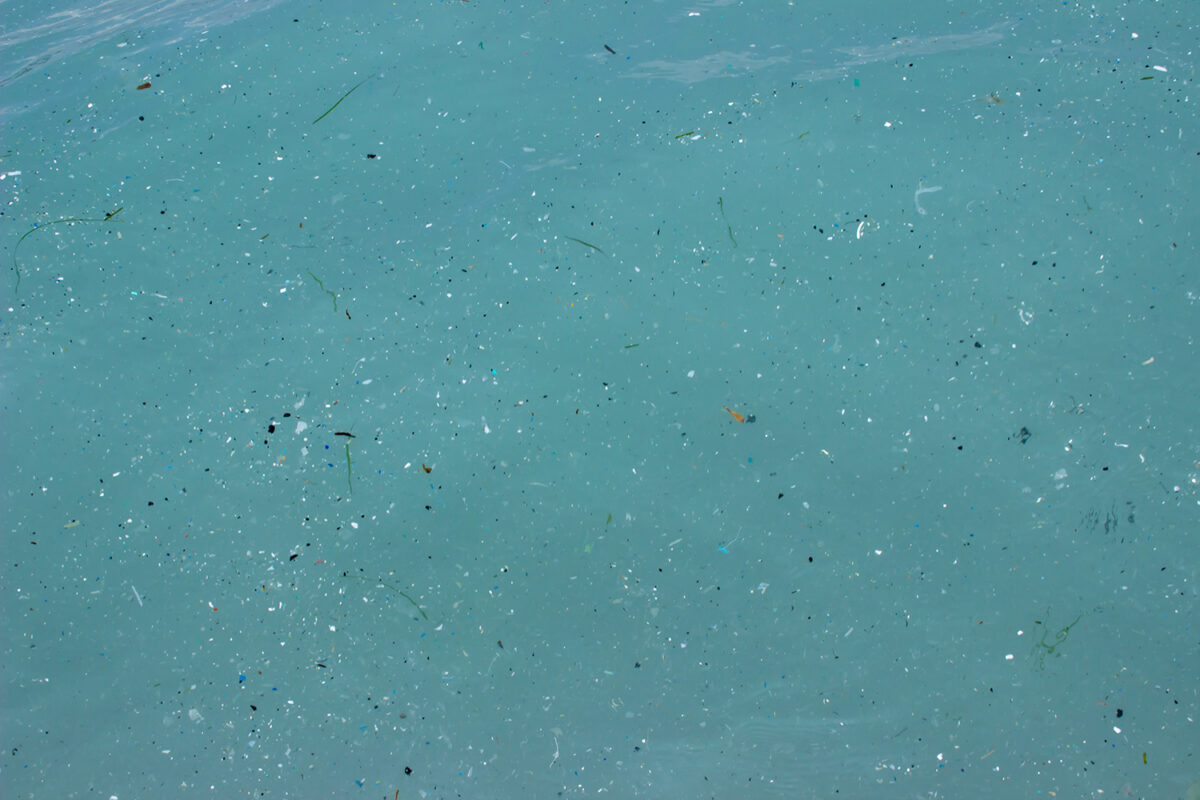
What Are Microplastics and Nanoplastics?
Microplastics are plastic fragments smaller than 5mm, while nanoplastics are smaller still, under 1 micrometre. They originate from a wide range of sources, including breakdown of larger plastic waste, synthetic textile fibres, tyre wear, cosmetic microbeads, and industrial processing residues.
Unlike the dissolved organic compounds that activated carbon is best known for removing, microplastics are solid, suspended particles. This distinction matters enormously for how — and how well — carbon filtration can capture them.
Why Microplastics in Water Matter
Microplastics and nanoplastics are increasingly classed alongside other emerging contaminants such as PFAS, due to growing evidence of their persistence in the environment and potential pathways into drinking water supplies. For water utilities, industrial dischargers, and food and beverage producers, this raises several pressing concerns:
- Regulatory pressure is increasing across Europe and the UK, with monitoring and reporting requirements for microplastics expected to tighten alongside existing PFAS and VOC frameworks.
- Reputational risk grows as public awareness of plastic pollution in water systems increases.
- Operational risk exists where microplastics interfere with downstream processes, membranes, or treated water quality.
- Supply chain accountability is becoming more important for food, beverage, and pharmaceutical manufacturers reliant on clean process water.
Getting ahead of this issue now, rather than reacting once regulation catches up, puts operators in a stronger position.
How Does Activated Carbon Capture Microplastics?
Activated carbon removes dissolved organic micropollutants by adsorbing them into an internal micropore network, typically pores smaller than 2 nanometres, that gives high-quality carbon a vast internal surface area of 1,000 to 1,200 square metres per gram. Microplastics are solid suspended particles rather than dissolved molecules, so they’re far too large to enter this internal pore structure at all. Instead, capture happens entirely at the external boundary layer and within the void spaces of the carbon bed, via two distinct mechanisms operating at different particle scales.
Physical Filtration for Larger Fragments
In granular activated carbon (GAC) systems, larger microplastic fragments are captured mechanically, broadly across the 1 to 500 micrometre range:
- Interstitial trapping — solid plastic fragments are mechanically strained and immobilised within the macro-porous channels between individual carbon granules.
- Surface roughness — structural micro-abrasions on the carbon’s external surface act as anchors, physically entangling fibrous polymers such as microfibres from textiles.
- Cake filtration — over extended run times, captured plastics and other suspended solids form a surface cake layer on the bed. This acts as a secondary, finer screening layer that can temporarily improve capture of fine particles, but at the cost of progressive head loss and, in severe cases, bed blinding or fluidisation.
Surface Adsorption for Nanoplastics
True nanoplastics, below 1 micrometre, are too small to be reliably strained out. Their movement through water is governed by Brownian motion rather than bulk flow, so capture depends on surface chemistry interactions across the carbon’s external geometric surface:
- Hydrophobic boundary layer partitioning — synthetic polymers such as polyethylene and polystyrene are intensely hydrophobic. In water, the thermodynamic drive to minimise free energy pushes these particles out of the aqueous phase and onto the hydrophobic basal planes of the carbon.
- Pi-pi electron stacking — for aromatic-containing polymers like polystyrene (PS) and PET, the conjugated pi-electron systems in the plastic’s molecular rings interact directly with the delocalised pi-electron sheets in the carbon’s graphene-like structure, creating unusually strong adhesion.
- Electrostatic repulsion barriers — weathered, environmentally aged microplastics undergo photo-oxidation, which introduces oxygen-containing functional groups (carbonyls and carboxyls) and gives particles a net negative surface charge. Since conventional activated carbon typically carries a neutral-to-slightly-negative Zeta potential at neutral pH, this can create a kinetic barrier that actively hinders particle attachment for the most weathered, real-world plastics.
PAC vs GAC: Performance at a Glance
| Operational Metric | Powdered Activated Carbon (PAC) | Granular Activated Carbon (GAC) |
| Primary capture mechanism | Co-coagulation / flocculation embedding | Deep-bed interstitial straining |
| Target particle range | Sub-micron and nanoplastics (<1 µm) | Macro to micro-scale fragments (1–500 µm) |
| Hydraulic impact | Negligible in contact tank; risk shifts downstream to membrane fouling | Progressive head loss, bed blinding, risk of fluidisation |
| Spent media path | Sludge matrix; irreversible single-use | Thermal reactivation and structural reuse loops |
| Process vulnerability | High risk of carrying bound nanoplastics past clarifiers | Desorption/breakthrough during hydraulic surges or backwashing |
Where Activated Carbon Filtration Hits Its Limits
Activated carbon is a powerful tool, but it isn’t a complete solution for microplastics on its own. Several real-world challenges affect performance:
- Surface area underutilisation. This is the core engineering paradox of using carbon for solid-particle removal. The 1,000 to 1,200 m²/g of internal surface area that makes high-quality carbon so effective against dissolved contaminants is bound up in micropores and mesopores that microplastics simply cannot diffuse into. For the solid-particle fraction, that surface area is functionally unavailable, meaning the media is effectively operating as an expensive sand filter rather than an adsorbent.
- Competitive fouling by dissolved organic matter (DOM). Natural organic matter and other background dissolved organics compete aggressively for the same external hydrophobic sites that nanoplastics rely on. DOM adsorbs rapidly to the outer boundary layer, masking the carbon’s surface properties, altering its surface charge, and severely reducing the long-term hydrophobic attraction available to nanoplastics.
- Thermal reactivation risks. During conventional reactivation in a rotary kiln or multiple-hearth furnace, accumulated microplastics undergo pyrolysis and gasification. While this destroys the plastic matrix, specific polymer types introduce real technical risk: halogenated polymers such as PVC or certain fluoropolymers can liberate corrosive gases (HCl, HF) that threaten kiln refractory linings and exhaust scrubbers, while inorganic fillers and pigments in some plastics can melt and deposit as ash, blinding pore entrances and degrading reactivated carbon quality.
- Hydraulic strain on GAC beds. Captured solids progressively increase resistance to flow through the bed, contributing to head loss and, in severe cases, bed blinding or fluidisation, which needs active management through backwashing and monitoring.
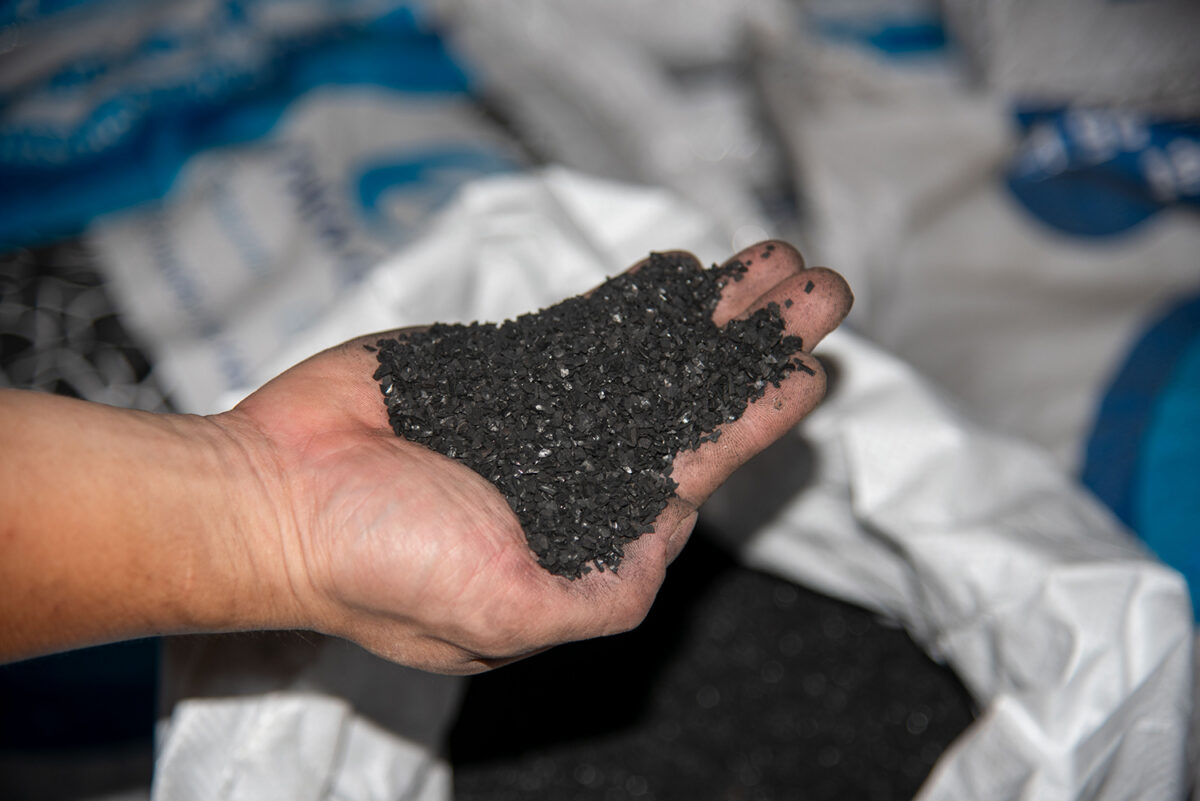
Getting the Best Performance from Carbon Systems
The good news is that with the right process design, activated carbon can be a genuinely effective part of a microplastics control strategy. Best practice includes:
- Positioning carbon correctly in the treatment train. Activated carbon should never be used as a primary screening barrier for suspended plastics. Carbon contactors perform best positioned strictly as polishing units after primary solids removal processes such as coagulation-flocculation-sedimentation or dissolved air flotation (DAF), ensuring the bulk solids load above roughly 10 micrometres is safely removed ahead of the bed. This lets carbon split its workload between true dissolved organic capture and sub-micron plastic polishing, rather than being overwhelmed by bulk solids it isn’t designed to handle.
- Matching media type to target particle size. Powdered activated carbon (PAC) suits very fine and nanoscale particles when combined with coagulation processes, while GAC is better suited to larger fragment capture in deep-bed contactors.
- Considering surface-enhanced carbons. Zeta potential modification — through cationic polymer impregnation (e.g. chitosan coatings) or iron-oxide grafting — can flip the carbon’s surface charge to a net positive value. This eliminates the electrostatic repulsion barrier described above, allowing the media to actively attract and capture negatively charged, weathered microplastics rather than working against them.
- Planning for reactivation carefully. Understanding the plastic load reaching carbon media helps protect reactivation infrastructure and maintain consistent reactivated carbon quality.
How Puragen Can Help
At Puragen, we help water utilities, industrial sites, and food and beverage producers design activated carbon systems that perform reliably against today’s contaminants, including microplastics, PFAS, and VOCs, not just the ones carbon was originally designed for decades ago.
Our approach combines:
- Expertise & Analytics to assess your specific water matrix and contaminant profile before recommending a solution.
- Carbon Engineering to select and, where needed, surface-engineer the right carbon for your particle and contaminant range.
- Fixed Filter Services and Mobile Filtration to ensure your carbon contactors are correctly positioned and sized within your wider treatment train.
- Reactivation expertise to manage spent carbon responsibly, protecting both your budget and your sustainability goals.
If microplastics are becoming a compliance or quality concern at your site, our team can help you understand whether your current carbon systems are working as hard as they could be, and what it would take to close the gap.
Talk to a purification expert today to find out how Puragen’s approach and capabilities can help you tackle microplastics, alongside the full range of emerging contaminants affecting water quality.