

Biogas & Biomethane Purification
Puragen’s tailored biogas and biomethane solutions are specifically engineered for the production of renewable energy – enhancing engine performance, reducing maintenance costs and downtime, while facilitating smooth, grid-compliant biomethane upgrading.
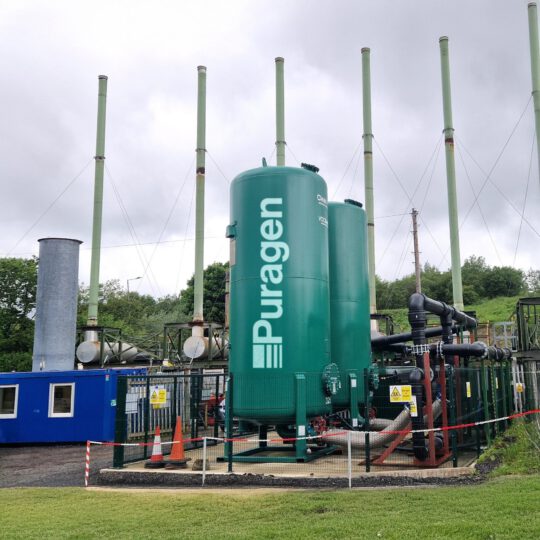
Trusted Leaders in Biogas Upgrading
Raw biogas produced through anaerobic digestion (AD) or landfill sources often contains a mixture of methane (CH4), carbon dioxide (CO2), and trace contaminants. Improper purification systems result in these impurities reducing energy efficiency, damaging equipment and failure to achieve compliance.
Biogas upgrading is an intricate process in which raw biogas is refined and converted into high-purity biomethane. This removes contaminants and unwanted gases, such as CO2, hydrogen sulfide (H2S), moisture, and volatile organic compounds (VOCs). These removals are critical for the safe use of biogas in combined heat and power (CHP) engines, grid injection, and vehicle fuels.
An advanced circular approach is helping to transform these conventional systems. By integrating carbon capture, gas purification, and resource recovery in one process, modern systems can achieve biogas purification using high-grade activated filtration media and mobile carbon units.
Puragen’s treatment is designed to address challenges faced in the sector, providing high removal efficiency across a wide range of operating conditions. This closed-loop process ensures regulatory compliance to develop a more sustainable pathway for renewable gas production and emissions reduction.
Contaminants we remove
Puragen delivers biogas purification systems carefully tailored to the specifications of CHP engine manufacturers, biomethane OEMs and operators.
Our high-capacity FiltraPure® media and VOCSorber® mobile carbon filtration units maintain low-pressure drop, high flow rates and extended media life to ensure optimal biogas quality, for maximum CHP engine efficiency and biomethane purity.
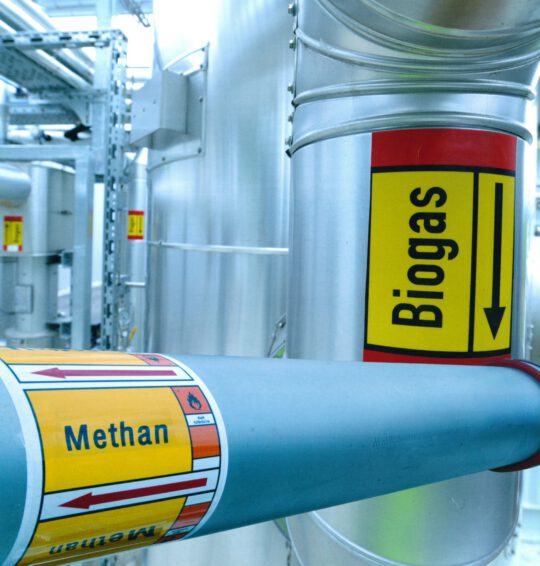
Activated carbon products to purify and upgrade biogas
To remove VOCs, H2S and odours from biogas streams, we provide both granular activated carbon and extruded pellets for gas filtration.

Granular Activated Carbon (GAC)
Provides high-capacity adsorption of VOCs for continuous biogas purification.
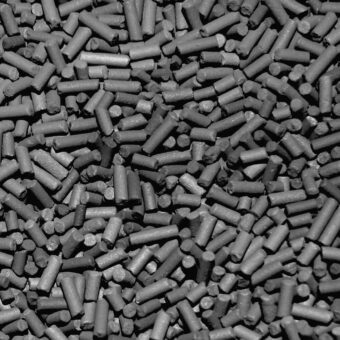
Extruded pellets
Optimal pressure drop and contact time for gas phase applications.
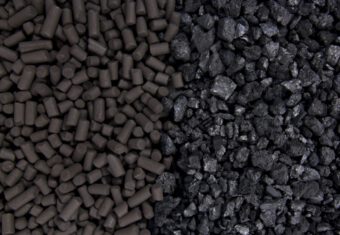
Impregnated carbons
Grades of GAC and pellets are available, impregnated with functional chemicals, specifically targeting inorganic contaminants like H₂S and NH₃.
Mobile filters for purifying biogas and biomethane
Puragen supplies a wide range of mobile carbon filters for gas phase purification applications. These modular units are generally supplied on a rental and service basis and offer a convenient plug & play solution that requires no on-site carbon handling.
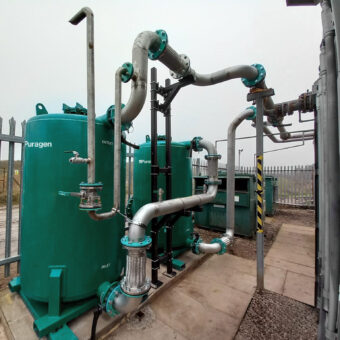
VOCSorber® 2-SX
Maximum Flow Rate (m3/hr): 2,500
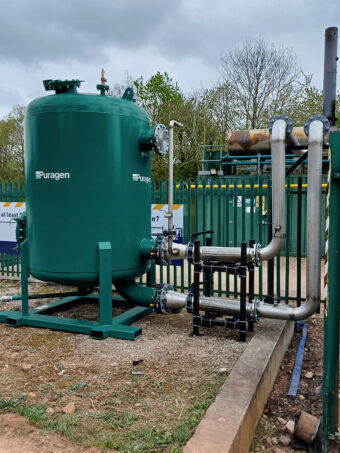
VOCSorber® 5
Maximum Flow Rate (m3/hr): 3,000
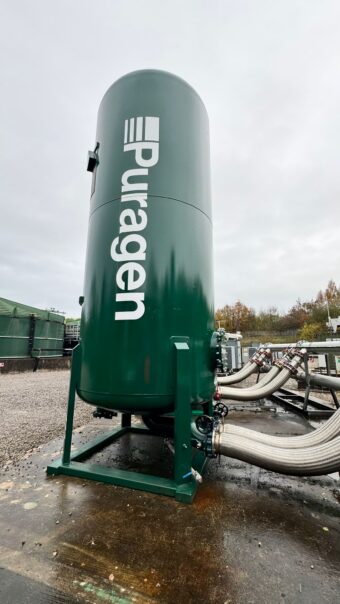
VOCSorber® 30
Maximum Recommended Flow Rate (m3/hr): 6,000
Relevant Industries
These industries commonly use Puragen’s Biogas and Biomethane Purification applications. Take a look at our other products and services for these industries.
Our Capabilities
To deliver the best possible filtration solutions for every customer, Puragen takes a long term partnership approach, we can manage and support each and every stage of the journey, and are committed to innovation to improve everything we do.

Expertise & Analytics
Our award winning chemists, materials scientists and engineers use leading lab facilities and analytics to derive and support precise technical solutions for each customer requirement.

Carbon Engineering
We supply a comprehensive range of carbons tailored to specific applications. We also enhance the performance of our carbon for specific processes via impregnation and precise particle sizing.

Fixed Filter Services
We can manage as much of the carbon lifecycle as each customer requires, from supply, carbon exchange and reactivation to system maintenance and optimisation.

Mobile Filtration
We operate a growing mobile filter fleet to deliver scalable, plug and play filters to customers, with maximum flexibility, minimal downtime, and no on-site waste handling.
Reactivation
We operate one of the most advanced closed-loop carbon reactivation networks in Europe to deliver efficient filtration, traceability and environmental benefits.

Integrated Logistics
Our processing and logistics hubs deliver to and support each customer’s needs across our full range of products and services.
Frequently Asked Questions
Biogas purification is the process of removing contaminants — including hydrogen sulfide (H2S), siloxanes, volatile organic compounds (VOCs), moisture, and carbon dioxide — from raw biogas produced through anaerobic digestion or landfill sources. Without effective purification, these impurities reduce energy efficiency, damage CHP engines, and prevent compliance with grid injection standards for biomethane.
Activated carbon is highly effective at removing a range of biogas contaminants, including hydrogen sulfide (H2S), siloxanes, pinene, limonene, ammonia (NH₃), and other volatile organic compounds (VOCs). These contaminants cause corrosion, abrasive engine deposits, and odour issues if left untreated. Impregnated carbon grades are available for targeted removal of inorganic contaminants such as H2S and ammonia.
Biogas is the raw gas produced through anaerobic digestion or from landfill, typically containing a mixture of methane, carbon dioxide, and trace contaminants. Biomethane is the refined, high-purity form of biogas produced after upgrading — removing CO2, H2S, moisture, and VOCs — making it suitable for grid injection (G2G), vehicle fuel, or use in CHP engines.
Siloxanes are silicon-containing organic compounds commonly found in biogas from anaerobic digestion sites. When combusted in a CHP engine, they form hard, abrasive silica deposits on hot surfaces including pistons, valves, and cylinder heads. This causes premature wear, reduces combustion efficiency, increases maintenance frequency, and can lead to costly component failure if not removed upstream.
A mobile carbon filter is a plug-and-play filtration unit pre-filled with activated carbon media, supplied on a rental and service basis. For biogas applications, units such as Puragen’s VOCSorber® range are connected directly into the gas stream to adsorb VOCs, H2S, and odorous compounds before the gas reaches CHP engines or biomethane upgrading systems. They require no on-site carbon handling and can be exchanged when the media is spent.
Puragen’s VOCSorber® mobile carbon filtration units cover a wide range of site capacities. The VOCSorber® 2-SX handles up to 2,500 m³/hr, the VOCSorber® 5 up to 3,000 m³/hr, and the VOCSorber® 30 up to 6,000 m³/hr recommended flow rate — making them suitable for small landfill gas sites through to large-scale AD and biomethane production facilities.
Yes. Spent carbon from biogas and biomethane applications can be reactivated through Puragen’s CR3 process, which is specifically designed for heavily loaded, high-sulphur carbons. This closed-loop approach recovers and restores spent carbon for reuse, reducing disposal costs and environmental impact compared to single-use virgin carbon replacement.
The optimal carbon for biogas purification depends on the specific contaminants present and operating conditions. Granular activated carbon (GAC) provides high-capacity VOC adsorption for continuous treatment, while extruded pellets offer optimal pressure drop and contact time for gas phase applications. Impregnated grades — where functional chemicals are added to the carbon — are recommended where targeted H2S or ammonia removal is required.
Biomethane injected into the gas grid must meet strict quality standards, including limits on H2S, VOCs, siloxanes, and other trace contaminants. Puragen’s purification systems are engineered to achieve these specifications consistently, supporting compliance with grid entry requirements and biomethane OEM standards — enabling operators to achieve reliable, uninterrupted G2G injection.
Biogas purification is used across a range of industries including energy (anaerobic digestion sites, landfill gas-to-electricity), waste management (energy from waste facilities), food and agricultural processing, and municipal operations. Any site that produces or uses biogas in CHP engines, or seeks to upgrade biogas to biomethane for grid injection or vehicle fuel, requires effective gas purification upstream.