
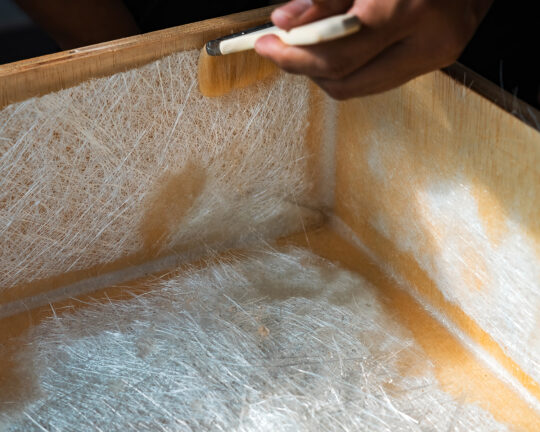
The polymer composite manufacturing sector has grown significantly over the past decade, driven by demand from aerospace, automotive, construction, marine and wind energy industries. Glass-reinforced plastic (GRP), carbon fibre composites, epoxy laminates and thermoplastic compounds are now produced at scale across the UK, Europe and beyond — and with that growth comes an increasingly complex emissions and effluent management challenge.
For environmental and process engineers working in this sector, the pressure is coming from multiple directions simultaneously: tightening VOC emission limits, stricter wastewater discharge consents, more rigorous workplace exposure standards, and growing corporate sustainability commitments. Managing contamination across both air and liquid phases is no longer a box-ticking exercise — it is an operational priority that demands the right treatment technology and the right partner.

What Contaminants Are Generated in Polymer Composite Manufacturing?
Composite manufacturing processes generate contaminants across two primary phases: air emissions and process wastewater. Understanding both is essential to designing an effective treatment strategy.
Which VOCs Are Released During Composite Manufacturing?
Volatile organic compounds (VOCs) are generated at multiple stages of the composite manufacturing process. The specific compounds present depend on the materials and processes involved, but common VOC emissions include:
- Styrene — the most significant VOC in GRP and polyester resin manufacturing, released during laminating, moulding and curing. Styrene is subject to both workplace exposure limits and site boundary emission controls.
- Methyl Methacrylate (MMA) — released during acrylic and methacrylate-based composite production, including the manufacture of cast acrylic sheet and certain adhesive systems.
- Acetone and other ketone solvents — widely used as cleaning agents and in resin preparation, generating significant VOC loads in workshop air.
- Epoxy resin off-gases — including reactive diluents and amine hardener vapours, released during mixing, application and curing of epoxy-based systems.
- Isocyanates — present in polyurethane composite systems, requiring particularly careful management due to their sensitising properties.
Process steps generating the highest VOC loads include open mould laminating, resin infusion, spray-up operations, surface coating and post-cure oven venting.
What About Dust and Fibrous Particles?
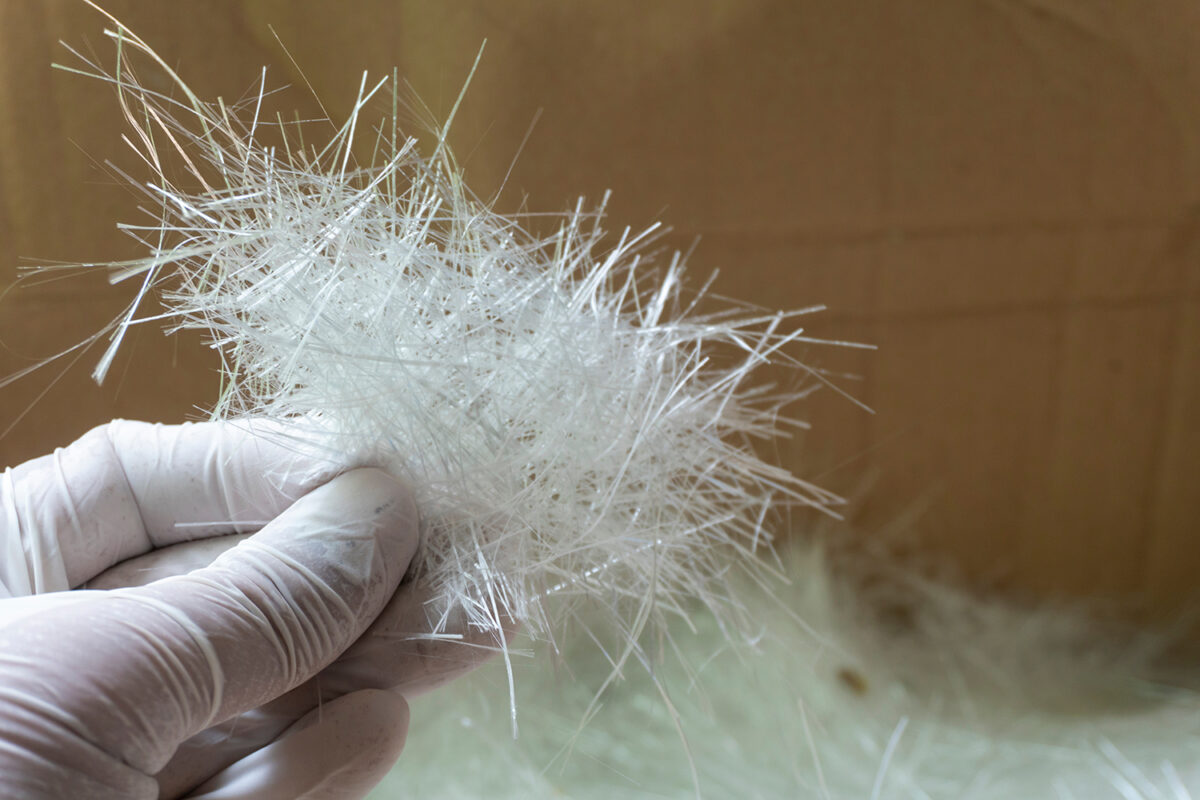
Cutting, grinding, sanding and trimming operations generate fine particulate matter including glass fibre dust and carbon fibre particles. These require extraction and physical filtration at source. While activated carbon is not the primary control for particulates, they are often co-present with VOCs in extraction air streams and must be considered in system design.
What Contaminants Are Found in Composite Manufacturing Wastewater?
Wastewater generated in composite manufacturing typically contains:
- Resin residues from equipment washing and spillage
- Solvent contamination from cleaning operations (acetone, MEK, IPA)
- Mould release agents — often wax or silicone-based compounds
- Styrene and other VOC carry-over into wash water
- AOX (Adsorbable Organic Halides) from halogenated solvent use
- Elevated COD (Chemical Oxygen Demand) from organic resin and solvent loading
This wastewater cannot be discharged to sewer or surface water without treatment. Failure to meet discharge consent conditions carries significant regulatory, financial and reputational risk.
What Regulations Apply to Composite Manufacturing Emissions?
VOC Emission Limits
VOC emissions from composite manufacturing are regulated under two principal frameworks in the UK and EU.
The Industrial Emissions Directive (IED) applies to larger installations and sets binding emission limit values for total VOC, with sector-specific provisions. Installations above the relevant solvent consumption thresholds must operate under an environmental permit and comply with emission limit values or implement a solvent management plan. An updated version, IED 2.0, is now in force in Europe and was implemented into national legislation on 1st July 2026, bringing broader industrial scope, stricter emission limits and stronger public legal rights.
The Medium Combustion Plant Directive (MCPD) is less directly relevant to composite VOC emissions but forms part of the broader regulatory framework operators need to navigate alongside the IED.
For styrene specifically, the Health and Safety Executive (HSE) sets workplace exposure limits (WELs) of 100 ppm (8-hour TWA) and 250 ppm (15-minute STEL) in the UK. Emission limits applicable in EU countries are available via the IFA database. These limits apply at the point of worker exposure and are enforced separately from site boundary emission controls under COSHH regulations. Meeting both simultaneously — protecting workers inside the facility while controlling emissions at the boundary — requires a coordinated ventilation and filtration strategy.
Wastewater Discharge Consents
Process wastewater discharge is regulated through environmental permits and trade effluent consents. Limits are set on a site-specific basis but typically include COD, suspended solids, pH and, where relevant, AOX. Operators discharging to controlled waters face tighter conditions than those discharging to sewer under a trade effluent agreement.
How Does Activated Carbon Control VOC Emissions from Composite Manufacturing?
Activated carbon adsorption is the most widely used and cost-effective technology for capturing VOC emissions from composite manufacturing processes — and is recognised as a Best Available Technique (BAT) for this application. It works by passing contaminated air through a bed of highly porous carbon, where VOC molecules are attracted to and held on the carbon’s internal surface, a process known as adsorption.
Activated carbon is effective across the full range of compounds commonly encountered in composite manufacturing: styrene, MMA, acetone, epoxy off-gases and isocyanate-associated organic compounds. The key variables in system design are carbon grade selection, bed sizing and contact time — all of which need to be matched to the specific VOC load and concentration profile of the process.
Puragen offers a wide range of FiltraPure® activated carbons suitable for treating composite manufacturing VOC emissions, including ultra-high-purity acid-washed variants for safely treating ketones and acetates.
Fixed Bed Carbon Filters
For continuous or high-volume VOC emissions — such as those from spray booths, laminating areas or curing ovens — fixed bed activated carbon filters provide a permanent, low-maintenance treatment solution. These are typically designed with twin vessels operating in lead-lag configuration, allowing one vessel to remain in service while the other is exchanged or regenerated.
Mobile Carbon Filtration Units
For lower-volume emission points, intermittent processes or sites where the VOC profile is changing, Puragen’s VOCSorber® mobile carbon filtration units offer a flexible alternative. These plug-and-play systems can be deployed rapidly, repositioned as process requirements change, and exchanged on a managed service basis — removing the operational burden of carbon management from site teams.
Carbon exchange frequency depends on VOC loading, but Puragen’s analytical capabilities allow spent carbon to be monitored so that exchange is based on actual performance rather than fixed schedules, optimising cost and compliance simultaneously.
How Is Activated Carbon Used to Treat Composite Manufacturing Wastewater?
Activated carbon is equally effective in the liquid phase, and for composite manufacturing wastewater it addresses several key contaminant groups simultaneously.
Resin residues, solvent carry-over and mould release agents are all amenable to carbon adsorption. Styrene and other VOCs dissolved in wash water are particularly well-suited to liquid-phase carbon treatment, as are the halogenated solvent residues that contribute to AOX loading. Elevated COD from organic contamination is reduced significantly through carbon adsorption, helping sites meet discharge consent conditions.
Do I Need to Pre-treat Wastewater Before Carbon Filtration?
Where wastewater contains suspended solids — resin particles, fibre fragments or undissolved material — pre-treatment by settlement or physical filtration is typically required before activated carbon contact. Carbon beds are not designed as primary solids removal devices, and high suspended solids will rapidly blind the carbon and reduce its effective life.
Choosing the Right System Configuration
Liquid-phase activated carbon treatment for composite manufacturing wastewater is typically delivered through Puragen’s AquaSorber® mobile filtration units, allowing treatment capacity to be scaled to actual wastewater volumes and adjusted as production changes. For sites with consistent, predictable wastewater flows, fixed in-ground or above-ground vessel systems may be more appropriate — Puragen’s engineering team can assess both options.
Where sites are working toward ISO 14001 certification or net-zero commitments, spent carbon from wastewater treatment can be recovered through Puragen’s REACT-Sys® reactivation service, significantly reducing the environmental footprint of the treatment process.

Why Managing Air and Water Emissions Together Makes Sense
One of the most common inefficiencies on composite manufacturing sites is treating air and water phase contamination as separate problems with separate solutions and separate service providers. In practice, the two are closely linked — the same compounds (styrene, acetone, MMA) appear in both the air extraction stream and the process wastewater, and a site-level understanding of total contaminant load is essential for designing treatment that works across both.
Puragen’s capability spans the full filtration journey: from initial analytical characterisation of your air and water chemistry, through carbon selection and system design, to ongoing carbon exchange, reactivation and waste management. For composite manufacturing sites managing both VOC emissions and wastewater discharge simultaneously, this integrated model offers significant operational and commercial advantages over managing multiple specialist contractors independently.
Specifically, Puragen can support:
- Analytics and characterisation — identifying the specific compounds and concentrations present in your air and water streams before specifying treatment
- Carbon selection — matching the right grade of FiltraPure® activated carbon to your specific VOC and wastewater chemistry for optimal performance
- Mobile filtration deployment — for both air and liquid phase applications, with rapid mobilisation and managed exchange
- Fixed system design and supply — for sites with stable, high-volume treatment requirements
- Carbon reactivation — recovering and recycling spent carbon via REACT-Sys® to reduce waste, CO₂ footprint and lifecycle cost
- Ongoing monitoring and compliance support — ensuring treatment performance keeps pace with changing production and regulatory requirements
Puragen has worked with sites across the industrial and manufacturing sector where both VOC control and wastewater treatment are live operational challenges. Whether the requirement is managing a single high-VOC process or designing an integrated treatment strategy across a complex multi-process facility, the approach is the same: understand the chemistry first, then engineer the solution.
Conclusion
Polymer composite manufacturing generates a complex mix of airborne and liquid-phase contaminants that are subject to increasingly stringent regulatory controls. Styrene, MMA, epoxy off-gases, resin residues and halogenated solvents all require active management — and the consequences of non-compliance are significant, from permit breaches and enforcement action to worker health risks and reputational damage.
Activated carbon adsorption, deployed correctly and managed as part of an integrated treatment programme, is the most practical and cost-effective solution available for this sector. The key is matching the right carbon grade and system configuration to the specific chemistry of your process — and working with a partner who can support you across the full treatment lifecycle.
Tell us about your manufacturing process and we’ll recommend the right filtration solution. Contact the Puragen team today to discuss your VOC emissions or wastewater treatment requirements, or find out more about our industrial and manufacturing applications and mobile filtration capability.