
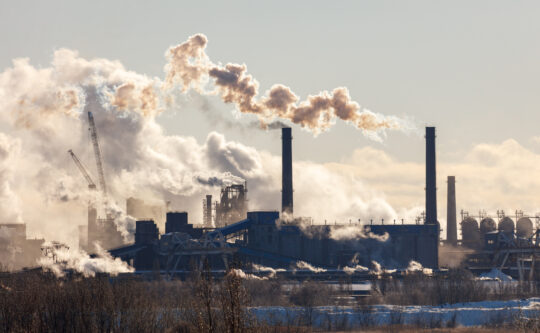
VOC Removal & Odour Control
Puragen develops and supplies activated carbons that enhance air quality and improve workplace conditions by removing harmful pollutants. We can help with compliance with regulatory standards such as the Clean Air Strategy, the Industrial Emissions Directive, and the U.S. Environmental Protection Agency National Ambient Air Quality Standards.
Air Treatment Technical Whitepaper
Explore how evolving regulations are reshaping industrial air treatment, from VOC control and odour management to BAT compliance.
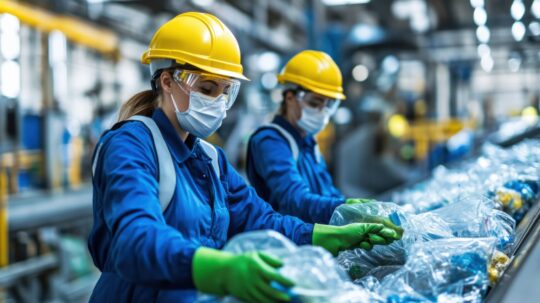
Contaminants we remove
Puragen supplies activated-carbon-based filtration services that remove volatile organic compounds (VOCs) and various odour-causing molecules:
Activated carbon products for VOCs and Odour Control
Puragen supplies a range of different activated carbon media for air treatment applications.
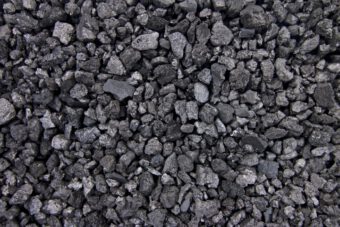
Granular Activated Carbon (GAC)
For applications where standard VOCs are the main contaminant group. Traditionally, 4mm pellets were used for this application, but recently large GAC from various raw materials has gained popularity.
We also offer virgin and reactivated versions. Reactivated carbon offers improved economic and environmental performance, with a far lower CO₂ footprint (>90%) compared with virgin materials.
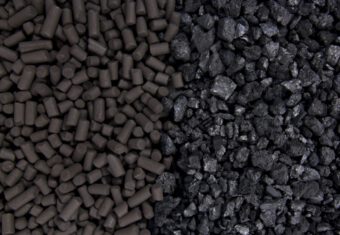
Impregnated activated carbons
For the removal of odorous compounds that aren’t readily adsorbed by standard carbon grades, we offer specialised impregnated grades. We treat this media with a functional chemical to promote a reaction with the targeted compound.
These carbons are widely used for the abatement of inorganics such as H2S and NH3, as well as DMS and formaldehyde. This works as a chemisorption reaction, or a chemical process, rather than the physical process in standard adsorption. We also offer impregnated grades for abatement of heavy metals, notably mercury.
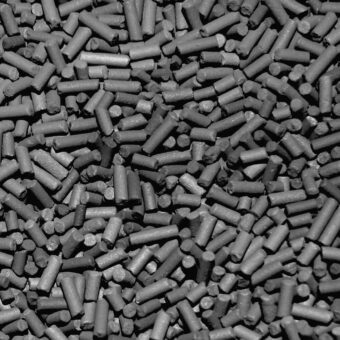
Extruded pellets
For the abatement of odours and the removal of VOCs, extruded activated pellets are typically used. We use impregnated versions for inorganic contaminants like hydrogen sulfide and ammonia to enhance efficiency. We also offer large GAC grades for this application.
Turning Air & Gas Challenges into Solutions
Explore expert blogs and real-world case studies to see how leading operators are tackling emissions, meeting regulations, and improving performance.
Mobile filters for VOCs & Odour Control
Puragen supplies a wide range of mobile carbon filters for gas phase purification applications. These modular units are generally supplied on a rental and service basis and offer a convenient plug & play solution that requires no on-site carbon handling.
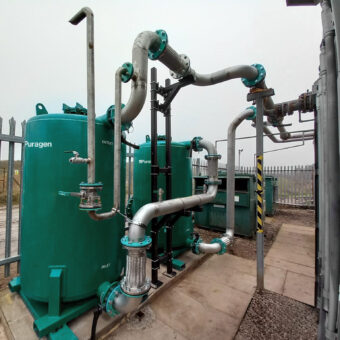
VOCSorber® 2-SX
Maximum Flow Rate (m3/hr): 2,500
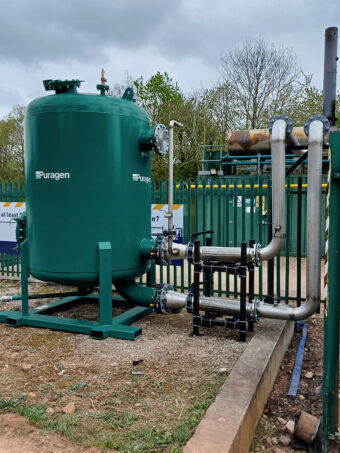
VOCSorber® 5
Maximum Flow Rate (m3/hr): 3,000
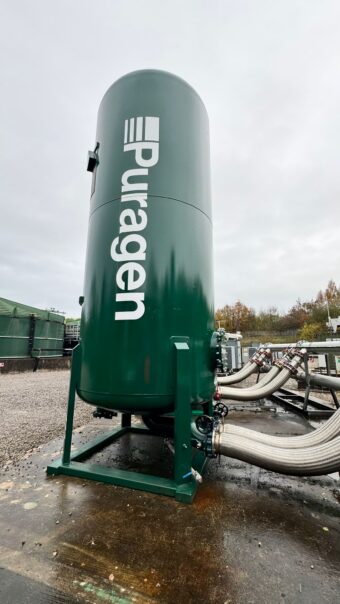
VOCSorber® 30
Maximum Recommended Flow Rate (m3/hr): 6,000
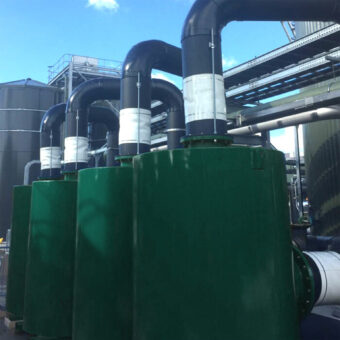
High Flow HF1.9 VOCSorber®
Recommended Flow Rate (m3/hr): 6,000
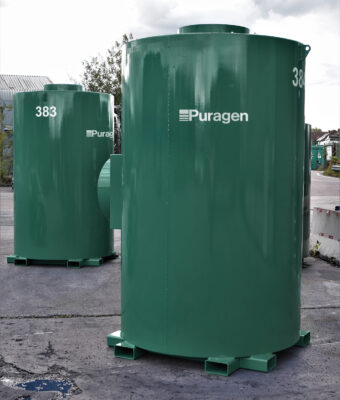
High Flow HF3.8 VOCSorber®
Recommended Flow Rate (m3/hr): 7,000
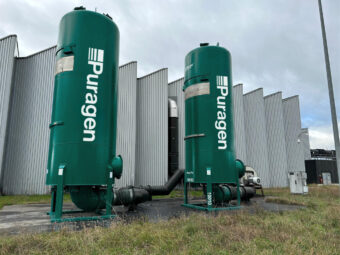
High Flow HF20V VOCSorber®
Recommended Flow Rate (m3/hr): 60,000
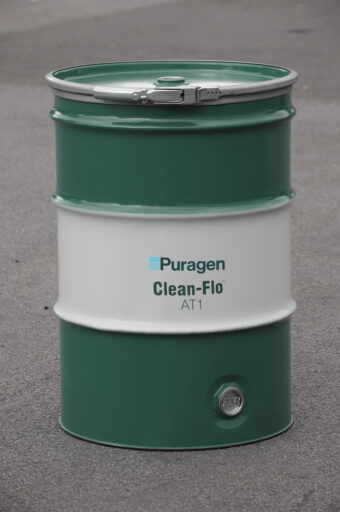
Clean-Flo® AT1
Maximum Flow Rate (m3/hr): 300
Frequently Asked Questions
Volatile organic compounds (VOCs) are gases released from industrial processes, chemicals, and materials. They can contribute to air pollution and may pose health risks with prolonged exposure. Controlling VOC emissions is essential for regulatory compliance and environmental protection.
Activated carbon removes VOCs and odors through adsorption, trapping molecules on its highly porous surface. This process is highly effective for capturing a wide range of organic compounds. It is commonly used in air filtration and purification systems.
Granular activated carbon is versatile and used in many air and water applications. Impregnated carbon is treated with chemicals to target specific contaminants more effectively. Extruded pellets offer low dust and high durability, making them ideal for continuous airflow systems.
Yes, VOC control solutions can often be integrated into existing systems such as filters, scrubbers, or air handling units. This allows facilities to improve performance without major infrastructure changes. Proper system design ensures optimal efficiency.
Industries such as manufacturing, waste management, food processing, and chemical production commonly require VOC control. Any operation that emits organic compounds or odors can benefit from treatment systems. Activated carbon provides a flexible and effective solution across these sectors.