
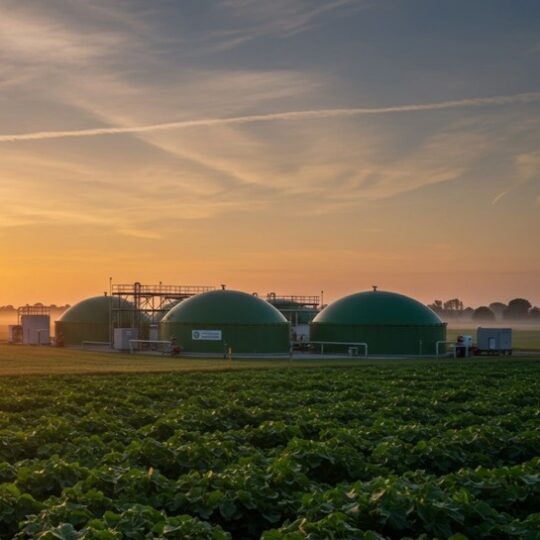
The biogas and biomethane sector is entering a period of significant transformation. As renewable energy production continues to expand across the UK, Europe and North America, operators face increasing pressure to maximise gas quality, improve process reliability and demonstrate environmental compliance. At the same time, evolving regulations and stricter emissions controls are reshaping how purification systems are designed, monitored and managed.
Historically, biogas treatment focused primarily on removing contaminants that could damage upgrading equipment and CHP engines. Today, however, operators must take a broader view. Regulatory expectations are increasing around emissions management, odour control, operational resilience and sustainability. As a result, successful gas treatment requires more than simply installing filtration equipment. It demands a lifecycle approach that integrates system design, contaminant monitoring, media management, performance optimisation and long-term compliance assurance.
The Shift Towards Biomethane Production
The renewable gas market is evolving rapidly. While biogas has traditionally been used for on-site electricity generation through Combined Heat and Power (CHP) systems, government support mechanisms and market incentives are changing the focus towards biomethane production, ie gas-to-grid rather than just on-site use.
As a result, many facilities are investing in upgrading infrastructure and looking for opportunities to increase biomethane yields from existing assets. In this environment, gas treatment systems are no longer simply protecting engines and equipment. They have become critical components in maximising gas quality, protecting upgrading processes and ensuring renewable gas consistently meets grid specifications.
Even relatively small increases in contaminant loading can affect upgrading efficiency, increase maintenance requirements and reduce the volume of biomethane available for sale. Consequently, treatment performance has become closely linked to both operational and financial performance.
The Challenge of Biogas Treatment
Biogas streams are inherently variable in terms of composition. Contaminant concentrations can fluctuate significantly depending on feedstock composition, seasonal changes and plant operating conditions. Operators must contend with a range of contaminants including hydrogen sulfide (H₂S), ammonia (NH3), siloxanes and other volatile organic compounds (VOCs), mercaptans and other trace gases that can negatively affect gas quality, environmental compliance and asset performance.
These challenges are often compounded by:
- Variable gas flow rates and contaminant loading
- Changing feedstock characteristics
- Fluctuating moisture and temperature conditions
- Increasing biomethane production demands
- Requirements for high plant availability
- Tightening environmental and emissions regulations
- Restrictions on gas network capacity
For many operators, maintaining consistent treatment performance, while maximising biomethane production, has become an increasingly complex balancing act.
A More Demanding Regulatory Environment
The regulatory landscape is evolving rapidly. Across Europe, regulators are placing greater emphasis on emissions control, environmental management systems and the application of Best Available Techniques (BAT).
Odour control is becoming an increasingly important area of focus. Regulators now expect operators to demonstrate proactive pollution prevention measures, supported by monitoring, documented procedures and evidence-based treatment strategies. As environmental complaints and odour-related litigation continue to increase, operators need systems capable of delivering reliable, long-term performance. rather than simply meeting minimum compliance requirements.
For biogas operators, this means treatment systems must do more than protect downstream equipment. They must also provide documented evidence of contaminant removal efficiency, operational control and environmental compliance.
Activated Carbon’s Role in Modern Biogas Treatment
Activated carbon remains one of the most effective and widely used technologies for biogas and biomethane purification. Its highly porous structure allows it to capture a broad range of contaminants, making it an essential component of modern gas treatment systems.
Key contaminants commonly removed using activated carbon include:
Hydrogen Sulfide (H₂S)
A corrosive, toxic and odorous gas that can cause significant damage to upgrading equipment, pipework and CHP engines. In the presence of moisture, hydrogen sulfide can form acidic compounds that accelerate corrosion and increase maintenance costs.
Siloxanes
Typically originating from household and industrial waste streams, siloxanes form abrasive silica deposits on hot surfaces and during combustion. These deposits can cause severe damage to CHP engines, turbines and other process equipment.
Volatile Organic Compounds (VOCs)
In addition to siloxanes, various other VOCs can affect gas quality, contribute to air pollution and create compliance challenges for operators.
Odorous Compounds
Compounds such as hydrogen sulfide and ammonia can generate nuisance odours, potentially leading to complaints from nearby communities and increased regulatory scrutiny.
As gas passes through an activated carbon filter bed, contaminants are adsorbed within the carbon’s extensive pore structure, allowing a cleaner, higher-quality gas stream to pass through for upgrading or energy generation.
Activated carbon should be viewed simply as a strategic operational and compliance asset. However, effective treatment requires correct media selection, evidence-based filter sizing, defined breakthrough limits, routine monitoring and sustainable spent-carbon management.
Delivering Operational Resilience
As facilities seek to maximise biomethane production and improve upgrading efficiency, flexibility has become increasingly important. Mobile activated carbon filtration systems provide operators with the ability to respond quickly to changing contaminant loads, plant maintenance requirements or increases in gas production without major capital investment.
This approach recently proved highly effective in a Puragen biomethane project, where an existing treatment system was limiting production stability. By implementing a mobile filtration retrofit, the site successfully improved treatment performance, increased biomethane production and enhanced operational reliability.
The project demonstrates how targeted filtration improvements can unlock additional production capacity, while helping operators maintain treatment stability and achieve commercial objectives. It also highlights the value of combining specialist activated carbon expertise with flexible mobile filtration solutions as production demands continue to grow.
View case study https://puragen.com/uk/case-studies/mobile-filter-retrofit-increases-biomethane-production-and-treatment-stability/
Future-Proofing Renewable Gas Operations
As biomethane production increases and environmental expectations continue to evolve, operators should be considering how to future-proof their purification systems. Facilities that invest in robust engineering, data-driven performance monitoring, flexible treatment technologies and circular carbon management strategies will be best positioned to maximise plant performance and maintain long-term compliance.
Puragen supports operators throughout this process, from media selection and laboratory testing through to mobile filtration, carbon reactivation and long-term process optimisation. Our award-winning CR3 reactivation technology represents a significant advancement for the sector, enabling high-sulfur activated carbons to be safely recycled and reused. This eliminates what was previously a difficult waste stream, while supporting a more circular approach to renewable gas production.
By combining technical expertise, innovative purification technologies and full lifecycle support, biogas and biomethane operators can improve treatment reliability, maximise renewable gas production and maintain confidence in an increasingly demanding regulatory and commercial environment.