
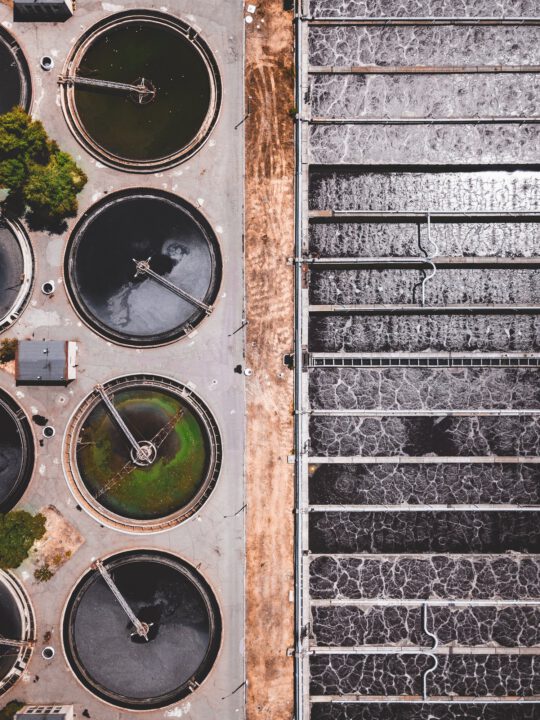
BOD and COD are foundational parameters in water treatment, wastewater management and industrial effluent compliance. They appear on virtually every discharge consent and environmental permit, providing regulators with essential indicators of organic pollution and overall effluent quality. Any exceedance carries significant operational, financial and regulatory consequences.
Although BOD and COD are often reported together, they measure fundamentally different aspects of water quality. Understanding their distinction and behaviour is central to selecting the right treatment strategy and maintaining compliance. BOD reflects the biodegradable organic load, while COD captures the total oxidisable content, including persistent compounds that biological processes cannot remove.
What is BOD (Biochemical Oxygen Demand)?
Biochemical Oxygen Demand (BOD) measures the amount of dissolved oxygen consumed by microorganisms as they break down organic matter in water. In simple terms: it tells you how much biodegradable organic material is present, by measuring how much oxygen bacteria need to decompose it.
High BOD is typically associated with:
- Municipal and domestic wastewater
- Food and beverage processing effluent
- Agricultural run-off and slurry
- Brewery and distillery discharge
- Paper and pulp manufacturing
When high-BOD effluent reaches a river or watercourse, bacteria consume oxygen to break down the organic matter, depleting dissolved oxygen in the water body and threatening aquatic life. This is why BOD is one of the most fundamental water quality parameters in environmental regulation.
What BOD does not tell you is whether non-biodegradable compounds are present. If your effluent contains synthetic chemicals, certain solvents or industrial compounds that bacteria cannot break down, BOD will not identify them.
What is COD (Chemical Oxygen Demand)?
Chemical Oxygen Demand (COD) measures the total amount of oxygen required to chemically oxidise organic and inorganic substances in a water sample.
COD is typically elevated in:
- Industrial and chemical manufacturing effluent
- Landfill leachate
- Pharmaceutical process water
- Textile dyeing and finishing wastewater
- Petrochemical and refinery discharge
Because COD captures all oxidisable substances and not just the fraction that bacteria can decompose, it will always be equal to or higher than BOD for the same sample. The difference between the two tells you something important about what is in your water.
Why Do BOD and COD Matter for Compliance?
Releases to surface water or groundwater require an environmental permit, issued by the relevant national regulator. Discharge to sewers is regulated separately through a trade effluent consent issued by the relevant water company.
Permits typically specify site‑specific limit values for BOD and COD, which are legally enforceable. Monitoring frequency, sampling method and reporting obligations are all specified in the permit conditions. Exceeding these limits constitutes a breach of permit conditions and consequences can include:
- formal warnings
- enforcement notices
- civil sanctions
- financial penalties
- prosecution under the Environmental Permitting Regulations
- suspension or revocation of the permit
- increased regulatory scrutiny with associated reputational impact.
How Can BOD and COD Be Reduced?
The right treatment approach depends on your effluent composition, your BOD:COD ratio, and the specific limits you need to meet.
Biological Treatment
For high-BOD effluents with a high BOD:COD ratio, biological treatment is typically the first line of defence. Activated sludge systems, biological aerated filters, trickling filters and sequencing batch reactors can all achieve significant BOD reduction and will reduce the biodegradable fraction of COD simultaneously. Biological treatment is cost-effective at scale but has inherent limitations when non-biodegradable compounds are present. Like all biological treatment systems, the efficiency and cost of operation is also related to the health and condition of the biological species present.
Activated Carbon Adsorption for COD
Where COD persists after biological treatment, indicating a significant non-biodegradable fraction, activated carbon adsorption is the most effective and widely adopted polishing technology. Activated carbon’s highly porous structure and large internal surface area allow it to adsorb a broad range of organic compounds that biological processes cannot touch, including synthetic dyes, certain pharmaceuticals, chlorinated solvents, pesticide residues and other persistent organics.
Activated carbon can be deployed as granular activated carbon (GAC) in AquaSorber® mobile filtration units for continuous treatment, allowing the spent GAC to be recycled via thermal reactivation. Alternatively, single-use powdered activated carbon (PAC) can be dosed directly into the effluent stream for variable or peak loads. For sites where COD is a consistent challenge, GAC polishing after biological treatment is a proven and cost-efficient approach.
Puragen works with industrial operators across a range of sectors where persistent COD is an operational challenge, providing carbon selection, system design, mobile filtration deployment, managed carbon exchange and spent carbon reactivation, to ensure treatment performance keeps pace with effluent variability and permit requirements.
Coagulation and Flocculation
For effluents where COD is associated with colloidal or suspended organic matter, common in food processing and some chemical manufacturing applications, coagulation and flocculation can be effective at removing the organic load before, or instead of, biological treatment. Chemical coagulants destabilise suspended particles, allowing them to aggregate and settle. This reduces COD but generates a sludge stream requiring further management.
Advanced Oxidation
For difficult-to-remove contaminants, including certain pharmaceuticals, endocrine-disrupting compounds and some industrial chemicals, advanced oxidation processes (AOPs) can break down compounds that neither biological treatment nor activated carbon can effectively address. AOPs are typically more energy-intensive and costly, usually being reserved for specific compound classes rather than general COD reduction.
Future-Proof Your Treatment Strategy with Puragen
Future-proof your treatment strategy with an activated carbon solution tailored to your water quality, contaminants and operational objectives.
Talk to the Puragen team about your requirements, or explore our water treatment solutions, specialist carbon media and mobile filtration capabilities.