Drinking Water Treatment with Activated Carbon
Puragen helps water utility companies and water providers deliver clean, safe, high-quality water to communities and customers.
Our activated carbon products and services are recognized within the industry to deliver effective removal of contaminants, including PFAS, pesticides and pharmaceuticals. Our solutions address the full treatment cycle, from initial contaminant assessment through to carbon reactivation and responsible disposal. From granular activated carbon beds to rapid-deployment mobile filtration units, we match the right technology to each water treatment challenge.
We provide a range of activated carbons, mobile filters and award-winning spent carbon reactivation to ensure that drinking water is safe, clean, and meets evolving regulatory standards.
Contaminants we remove
We provide end-to-end filtration services that help drinking water providers purify drinking water by removing a range of contaminants and byproducts. Our activated carbon media is selected and engineered to target specific contaminants based on your source water profile and regulatory requirements.
Activated Carbon products for Drinking Water
We provide a range of different carbon filtration media for drinking water applications. Each carbon type is selected based on the target contaminants, flow rates, and operational requirements of the treatment facility. Our carbon engineering team works with customers to identify the most effective media, whether that requires a fixed bed system or a batch dosing approach.

Granular Activated Carbon (GAC)
For applications where drinking water is passed through a bed of carbon. GAC is well suited for continuous flow systems and supports a more sustainable and cost-efficient treatment operation.
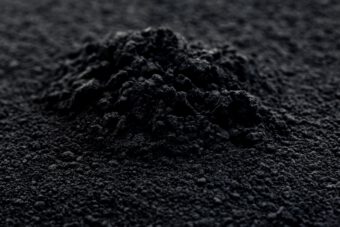
Powdered Activated Carbon (PAC)
For applications where drinking water is treated in a batch process, for example when dealing with seasonal spikes in pesticides. Powdered carbon cannot be reactivated.
Mobile filters for Drinking Water
Puragen’s range of mobile filters are optimised for a variety of drinking water applications. We can adapt our filters to integrate with any specific site installation requirements. Mobile filtration is particularly effective for emergency response, short-term compliance needs, and capacity supplementation during planned or unplanned outages. Our AquaSorber units are available in multiple flow rate configurations and can be deployed quickly with no on-site waste handling required.
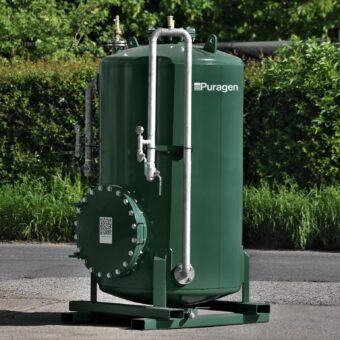
AquaSorber 2-SX
Maximum Flow Rate (m3/hr): 12
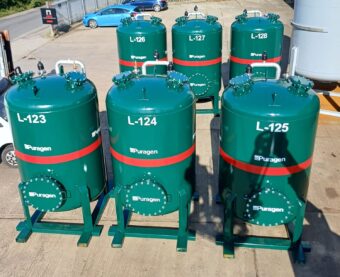
AquaSorber 5
Maximum Flow Rate (m3/hr): 20
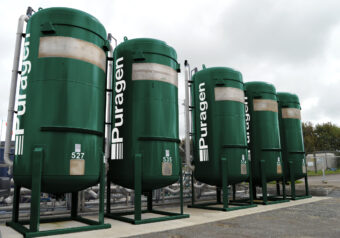
AquaSorber 22-100
Maximum Flow Rate (m3/hr): 100
Relevant Industries
These industries commonly use Puragen’s Drinking Water applications. Take a look at our other products and services for these industries. Each industry faces distinct regulatory and operational demands, and Puragen’s product and service range is structured to address those requirements at scale.
Remove contaminants for safe drinking water and wastewater discharge
Improve water quality of commercial and residential water via the use of POU and POE filters
Our Capabilities
To deliver the best possible filtration solutions for every customer, Puragen takes a long term partnership approach, we can manage and support each and every stage of the journey, and are committed to innovation to improve everything we do.

Expertise & Analytics
Our award winning chemists, materials scientists and engineers use leading lab facilities and analytics to derive and support precise technical solutions for each customer requirement.

Carbon Engineering
We supply a comprehensive range of carbons tailored to specific applications. We also enhance the performance of our carbon for specific processes via impregnation and precise particle sizing.
Fixed Filter Services
We can manage as much of the carbon lifecycle as each customer requires, from supply, carbon exchange and reactivation to system maintenance and optimisation.

Mobile Filtration
We operate a growing mobile filter fleet to deliver scalable, plug and play filters to customers, with maximum flexibility, minimal downtime, and no on-site waste handling.
Reactivation
We operate one of the most advanced closed-loop carbon reactivation networks in Europe to deliver efficient filtration, traceability and environmental benefits.
Integrated Logistics
Our processing and logistics hubs deliver to and support each customer’s needs across our full range of products and services.
case studies
Puragen Case Studies
See how Puragen is helping customers succeed with our Water & Liquid applications. Our case studies cover a range of drinking water treatment challenges, including PFAS abatement, disinfection byproduct control, and rapid-response mobile filtration deployments. Each project reflects our commitment to delivering measurable, compliant outcomes through tailored activated carbon solutions.
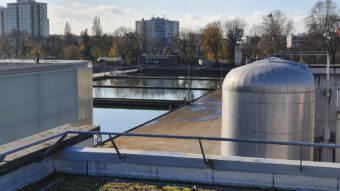
PFAS Abatement: Drinking Water Case Study
A multi-year contract to deliver a comprehensive PFAS treatment solution at a drinking water facility
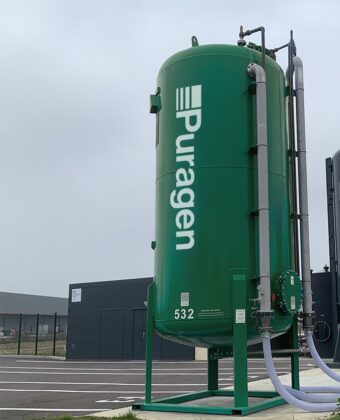
Mobile PFAS Treatment for Drinking Water
Advanced activated carbon helped restore drinking water quality following PFAS contamination in a French municipality.
Drinking Water: Removal of PFAS
Search, Capture, Destroy: a multi-site PFAS treatment solution, achieving complete PFAS destruction at a UK water utility.
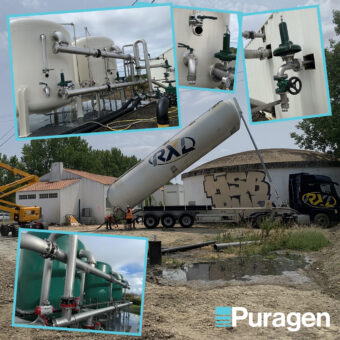
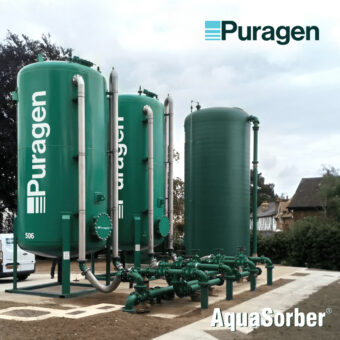
Mobile Carbon Filters for Drinking Water Plants
Puragen deployed two 22 m³ AquaSorber® mobile carbon filters at a drinking water site in southern England, providing a fast plug-and-play solution for…
Frequently Asked Questions
Activated carbon is effective at removing a wide range of drinking water contaminants, including PFAS, pesticides, herbicides, pharmaceuticals, chlorine, chloramine, and disinfection byproducts such as trihalomethanes (THMs) and haloacetic acids (HAAs). The specific carbon type and configuration are selected based on the contaminants present and the treatment objectives of the facility.
GAC is used in fixed-bed systems where water passes continuously through a carbon bed, and it can be reactivated at end of life for reuse. PAC is dosed directly into water as part of a batch treatment process, making it well suited for responding to seasonal contaminant spikes such as pesticide runoff, though it cannot be reactivated.
Carbon selection ultimately depends on the contaminant types and concentrations present in your source water. Get in touch to discuss your contaminants of concern with our team.
Puragen offers a range of AquaSorber mobile carbon filtration units, including the AquaSorber 2-SX, AquaSorber 5, and AquaSorber 22-100, with maximum flow rates ranging from 12 to 100 m³/hr. These units can be adapted to integrate with site-specific installation requirements and deployed rapidly for planned or emergency treatment needs.
Yes, Puragen operates award-winning spent carbon reactivation services as part of its closed-loop approach to the carbon lifecycle. Reactivation allows GAC to be recovered, reprocessed, and returned to service, reducing both material costs and environmental impact for water treatment operators.
Puragen’s drinking water products and services are used across municipal water utilities and commercial and residential water treatment applications. Both sectors benefit from Puragen’s full-service approach, which spans carbon supply, mobile filtration, fixed filter services, analytics, and integrated logistics.