Dialysis
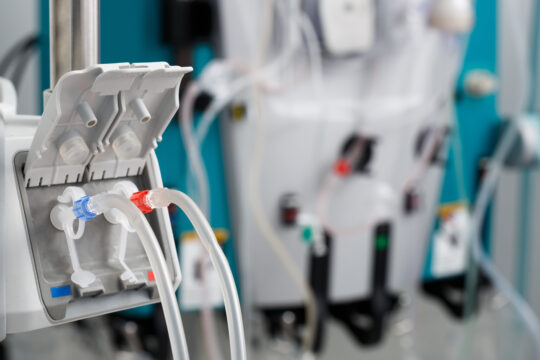
Puragen provides critical water purification technology for hemodialysis clinics. High purity carbon products efficiently remove chlorine, chloramine and other organic contaminants from water to protect dialysis membranes.
Puragen’s filtration media safeguard patient health and ensure compliance with stringent medical water quality standards including the British Standards Institute (BS EN 23500) and meet the Association for the Advancement of Medical Instrumentation (AAMI) standards.
Dialysis water purity requirements are among the most demanding of any water treatment application, and carbon selection must account for chloramine breakthrough, bed exhaustion rates, and the risk of carbon fines entering the water system. Puragen’s technical team works with clinic operators and equipment suppliers to specify the correct carbon grade, vessel configuration, and exchange schedule for each installation. All products are supplied with full documentation to support regulatory compliance and quality assurance processes.
Contaminants we remove
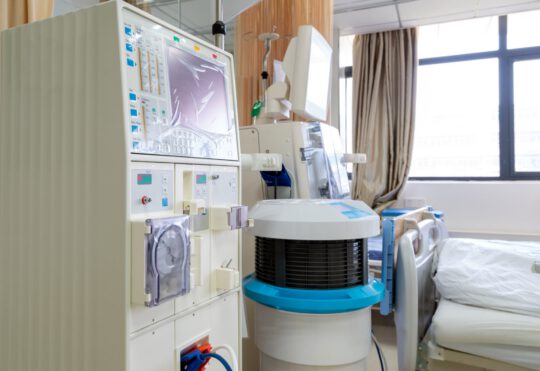
Puragen’s dialysis applications ensure the highest level of dialysis water purity by adsorbing harmful contaminants.
Activated carbon products for Dialysis
Puragen provides a comprehensive range of premium activated carbon solutions for dialysis purification, ensuring efficient contaminant removal and long-term cost savings. Dialysis water purity requirements are among the most demanding of any water treatment application, and carbon selection must account for chloramine breakthrough rates, bed exhaustion, and the risk of carbon fines entering the water system. Puragen’s technical team works with clinic operators and equipment suppliers to specify the correct carbon grade, vessel configuration, and exchange schedule for each installation. All products are supplied with full documentation to support regulatory compliance and quality assurance processes.

Granular Activated Carbon (GAC)
High-purity, high-capacity acid-washed carbons, for applications where water is passed through a fixed but refillable bed of carbon in granular form.
Mobile filters for Dialysis
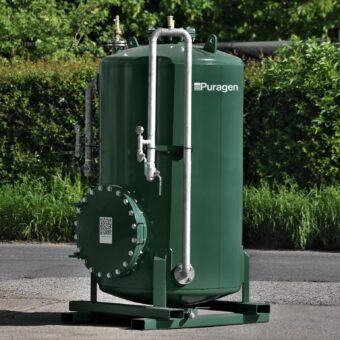
Puragen’s range of mobile filters are optimised for a variety of liquid phase applications. We can adapt our filters to integrate with any specific site installation requirements.
Mobile filtration is particularly suited to dialysis applications requiring temporary capacity, clinic relocations, or bridging treatment during fixed system maintenance or carbon exchange. Puragen’s AquaSorber units are pre-commissioned and arrive ready to connect, minimizing disruption to clinic operations. Carbon loading, exchange scheduling, and spent carbon removal are all managed by Puragen, with no on-site waste handling required from clinic staff.
AquaSorber 2-SX
Maximum Flow Rate (m3/hr): 12
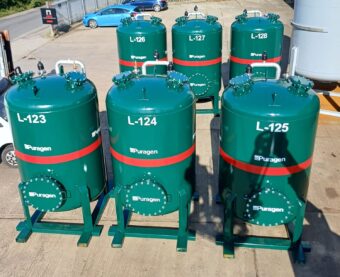
AquaSorber 5
Maximum Flow Rate (m3/hr): 20
Relevant Industries
These industries commonly use Puragen’s Dialysis applications. Take a look at our other products and services for these industries. The fine chemicals and medical sector operates under some of the most stringent water quality and regulatory requirements across any of Puragen’s application areas. Puragen’s experience supplying carbon into these environments means our products and documentation are designed to meet the traceability, purity, and compliance expectations of medical-grade operations. Contact us to discuss your facility’s specific water quality standards and carbon requirements.
Purify, decolorise and remove contaminants from chemical and medical products
Our Capabilities
To deliver the best possible filtration solutions for every customer, Puragen takes a long term partnership approach, we can manage and support each and every stage of the journey, and are committed to innovation to improve everything we do.

Expertise & Analytics
Our award winning chemists, materials scientists and engineers use leading lab facilities and analytics to derive and support precise technical solutions for each customer requirement.

Carbon Engineering
We supply a comprehensive range of carbons tailored to specific applications. We also enhance the performance of our carbon for specific processes via impregnation and precise particle sizing.
Fixed Filter Services
We can manage as much of the carbon lifecycle as each customer requires, from supply, carbon exchange and reactivation to system maintenance and optimisation.

Mobile Filtration
We operate a growing mobile filter fleet to deliver scalable, plug and play filters to customers, with maximum flexibility, minimal downtime, and no on-site waste handling.
Reactivation
We operate one of the most advanced closed-loop carbon reactivation networks in Europe to deliver efficient filtration, traceability and environmental benefits.

Integrated Logistics
Our processing and logistics hubs deliver to and support each customer’s needs across our full range of products and services.
case studies
Puragen Case Studies
See how Puragen is helping customers succeed with our Water & Liquid applications. While dialysis-specific case studies are available on request, the broader projects shown here demonstrate Puragen’s capability in high-purity liquid phase applications where water quality directly affects product integrity or patient outcomes. Each case study outlines the treatment challenge, the carbon solution deployed, and the results achieved. Contact Puragen to discuss comparable dialysis water treatment projects and available reference data.
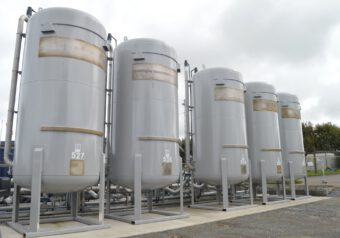
Large-Scale PFAS Remediation Case Study
Wastewater treatment for 17 PFAS species. high removal efficiency, regulatory compliance and secure PFAS destruction.
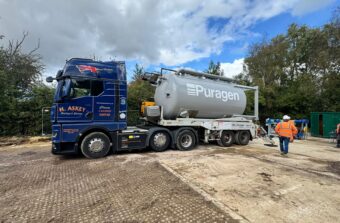
PFAS Removal from Industrial Wastewater
Advanced removal and destruction of PFAS from industrial wastewater at a chemical manufacturing facility.
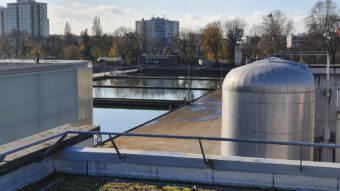
PFAS Abatement: Drinking Water Case Study
A multi-year contract to deliver a comprehensive PFAS treatment solution at a drinking water facility
PFAS Abatement: Wastewater Case Study
High-performance activated carbon removes PFAS from wastewater, helping protect ecosystems and support compliance.
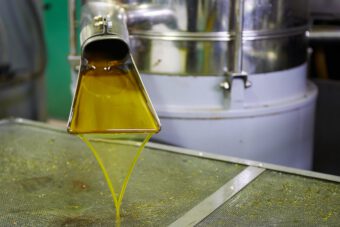
High-Efficiency PAH Removal for Edible Oil
Puragen’s PAC solution removed harmful PAHs, improving taste, colour and safety while maintaining efficient, cost-effective edible oil production.
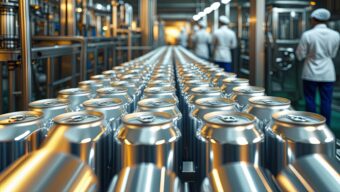
Operational Continuity at Beverage Production Sites
Rapid catalytic carbon deployment restored water quality, prevented shutdown and protected product quality and operations.
Frequently Asked Questions
Activated carbon is the standard method for removing chlorine and chloramine from water before it enters a dialysis system, as both compounds can cause serious harm to patients if present in dialysate. GAC beds provide continuous, high-capacity adsorption at the flow rates typical of hemodialysis clinics, and are required as part of water treatment train designs that comply with AAMI and BS EN 23500 standards. Puragen supplies dialysis-grade carbons specifically selected for their purity, adsorption capacity, and low extractables profile.
Dialysis water quality in the US is governed by AAMI standards, which set maximum allowable levels for chemical contaminants, microbial content, and endotoxins in water used for hemodialysis. These standards require that chlorine and chloramine be reduced to non-detectable levels before water contacts the dialyzer membrane. Puragen’s GAC products are selected and documented to support compliance with these requirements.
Exchange frequency depends on the chloramine concentration in the incoming water supply, the flow rate through the carbon bed, and the bed volume specified for the installation. Most dialysis facilities monitor for chloramine breakthrough continuously and schedule carbon exchange based on measured bed exhaustion rather than fixed intervals. Puragen can assist with sizing calculations and exchange scheduling to ensure uninterrupted protection throughout the carbon service life.
Chloramine breakthrough occurs when the carbon bed becomes exhausted and can no longer adsorb incoming chloramine, allowing it to pass into the dialysis water system. Because chloramine cannot be removed by reverse osmosis membranes alone, a failure in the carbon stage poses a direct risk to patient safety. Redundant carbon vessels operated in series, combined with continuous online monitoring, are the standard safeguard against breakthrough events.
Yes. Puragen supports dialysis facilities at all stages, from initial carbon specification and vessel sizing through to scheduled exchange programs and emergency supply. Our integrated logistics network is designed to deliver carbon reliably against the exchange schedules that clinic operations depend on, with full documentation provided for quality and compliance records. Contact Puragen to discuss supply arrangements for your clinic or network of facilities.