Wastewater Treatment
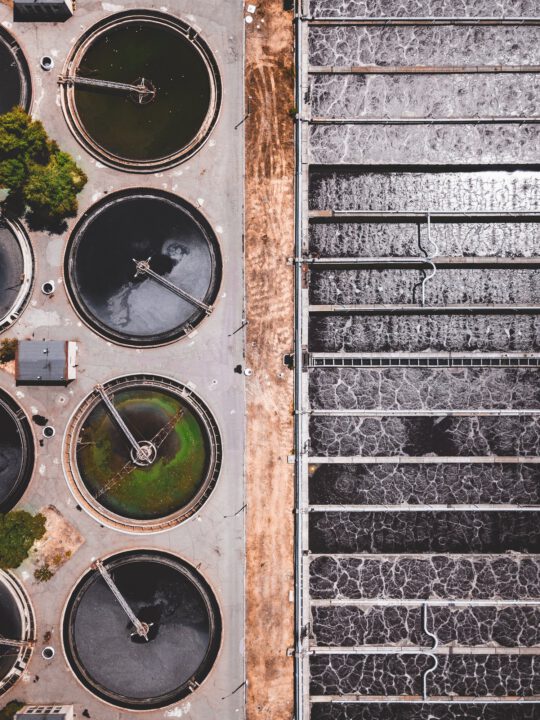
Puragen’s activated carbon media and mobile filters tailored for wastewater treatment across the municipal water, fine chemicals & medical, food & beverage, industrial & manufacturing and waste sectors. We help to remove organic compounds and byproducts to meet strict regulations such as the Urban Waste Water Treatment Directive (UWWTD), Water Framework Directive (WFD), and Industrial Emissions Directive (IED).
Puragen’s products and services are trusted for effectively removing contaminants like PFAS, pesticides, pharmaceuticals and other persistent organic pollutants (POPs). Puragen offers a range of media, mobile filters and award-winning reactivation to deliver clean, compliant water that meets evolving regulations. Designed for minimal disruption, our advanced filtration ensures purified, safe wastewater.
Contaminants we remove
Puragen’s activated carbon solutions eliminate a wide range of contaminants.
For wastewater treatment plants (WWTPs), Puragen removes PFAS, micropollutants and pharmaceutical residues, preventing bioaccumulation and ensuring safe water discharge.
In industrial applications, Puragen removes unwanted contaminants, including dissolved VOCs, hydrocarbons and chlorinated solvents to support safe discharge of the water and ensure permit compliance.
Activated carbon products for Wastewater
We provide a range of different carbon filtration media for wastewater applications. Selecting the right carbon form depends on your flow rates, contaminant profile, and whether reactivation is a priority for your operation. Puragen’s technical team can assess your specific wastewater composition and recommend the optimal media grade and configuration. All carbon products can be supplied as part of a managed service, including exchange, reactivation, and performance monitoring.
Granular Activated Carbon (GAC)
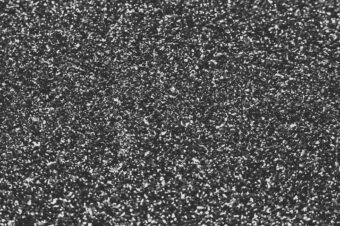
GAC is the standard solution for continuous-flow wastewater treatment, where water passes through a fixed bed of granular carbon media. Puragen’s GAC grades deliver reliable adsorption of PFAS, VOCs, chlorinated solvents, and other persistent organic contaminants across both municipal and industrial applications. Spent GAC can be reactivated at Puragen’s award-winning facility, reducing operating cost and environmental impact over the carbon lifecycle.
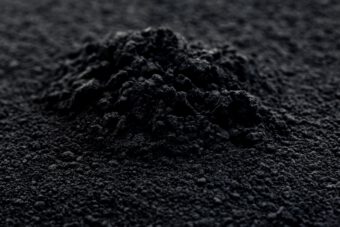
Powdered Activated Carbon (PAC)
PAC is designed for batch-dosed treatment where carbon is added directly to the water stream and removed by clarification or filtration. It is particularly effective for managing seasonal or event-driven contamination spikes, such as pesticide runoff or episodic industrial discharge, without the capital investment of a fixed-bed system. Puragen’s PAC grades are engineered for rapid adsorption kinetics and can be matched to specific contaminant targets including micropollutants, pharmaceuticals, and taste-and-odor compounds.
Mobile filters for Wastewater
Puragen’s mobile filters are optimised for a variety of water applications. They offer a convenient plug & play solution for many liquid phase purification processes. We can adapt our filters to integrate with any specific site installation requirements.
Mobile filters are particularly well suited for emergency response situations, temporary capacity expansion, and pilot-scale testing ahead of a permanent installation. All units are pre-commissioned and arrive ready to connect, minimizing site preparation and downtime. Puragen manages carbon loading, exchange scheduling, and spent carbon removal, so your team is not required to handle waste on-site.
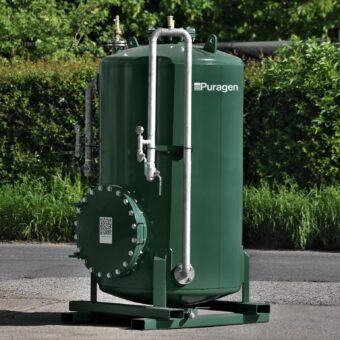
AquaSorber 2-SX
Maximum Flow Rate (m3/hr): 12
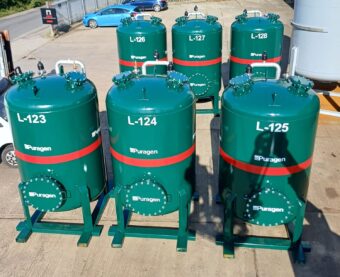
AquaSorber 5
Maximum Flow Rate (m3/hr): 20
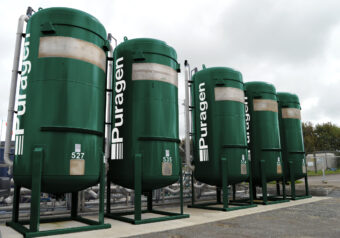
AquaSorber 22-100
Maximum Flow Rate (m3/hr): 100
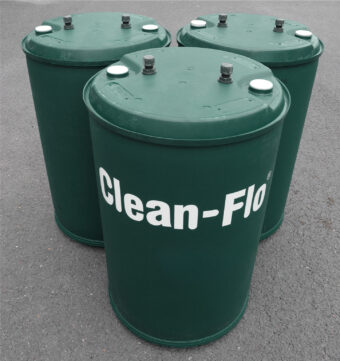
Clean-Flo HY1
Maximum Flow Rate (m3/hr): 1.1
Relevant Industries
These industries commonly use Puragen’s Wastewater Treatment applications. Take a look at our other products and services for these industries. Each industry faces distinct contaminant profiles, discharge limits, and operational constraints, and Puragen’s solutions are tailored accordingly rather than supplied as off-the-shelf products. Our technical specialists work directly with process engineers and environmental compliance teams to design filtration approaches that fit within existing infrastructure. Contact us to discuss how Puragen supports your specific sector.
Remove contaminants for safe drinking water and wastewater discharge
Purify, decolorise and remove contaminants from chemical and medical products
Enhance safety and quality through purification, decolorisation, deodorisation and removal of organic compounds
Filter emissions from industrial and manufacturing processes
Capture emissions and odors from waste facilities such as waste reception halls and waste transfer stations
Our Capabilities
To deliver the best possible filtration solutions for every customer, Puragen takes a long term partnership approach, we can manage and support each and every stage of the journey, and are committed to innovation to improve everything we do.

Expertise & Analytics
Our award winning chemists, materials scientists and engineers use leading lab facilities and analytics to derive and support precise technical solutions for each customer requirement.

Carbon Engineering
We supply a comprehensive range of carbons tailored to specific applications. We also enhance the performance of our carbon for specific processes via impregnation and precise particle sizing.
Fixed Filter Services
We can manage as much of the carbon lifecycle as each customer requires, from supply, carbon exchange and reactivation to system maintenance and optimisation.

Mobile Filtration
We operate a growing mobile filter fleet to deliver scalable, plug and play filters to customers, with maximum flexibility, minimal downtime, and no on-site waste handling.
Reactivation
We operate one of the most advanced closed-loop carbon reactivation networks in Europe to deliver efficient filtration, traceability and environmental benefits.
Integrated Logistics
Our processing and logistics hubs deliver to and support each customer’s needs across our full range of products and services.
case studies
Puragen Case Studies
See how Puragen is helping customers succeed with our Water & Liquid applications. These projects span municipal treatment plants, chemical manufacturers, food processors, and industrial sites operating under strict environmental permits. Each case study details the contaminant challenge, the activated carbon solution deployed, and the compliance outcomes achieved. They provide a practical reference for engineers and procurement teams evaluating activated carbon filtration for similar applications.
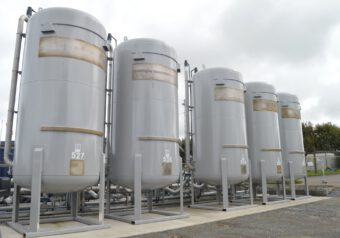
Large-Scale PFAS Remediation Case Study
Wastewater treatment for 17 PFAS species. high removal efficiency, regulatory compliance and secure PFAS destruction.
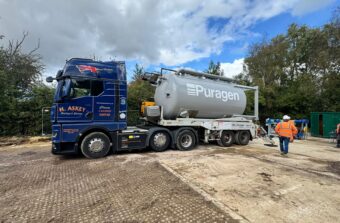
PFAS Removal from Industrial Wastewater
Advanced removal and destruction of PFAS from industrial wastewater at a chemical manufacturing facility.
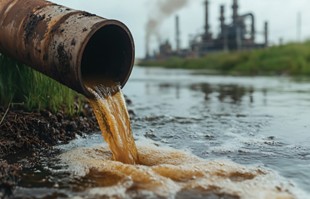
PFAS Abatement: Wastewater Case Study
High-performance activated carbon removes PFAS from wastewater, helping protect ecosystems and support compliance.
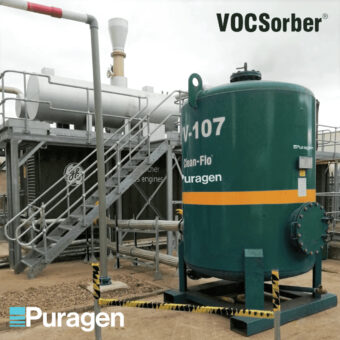
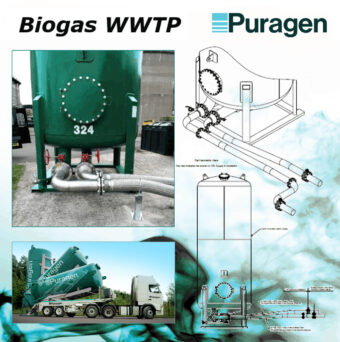
Biogas at a wastewater treatment plant
We supported a major UK wastewater biogas facility by installing a 5 m³ VOCSorber® filter to protect its CHP engine from siloxanes and VOCs. Our…
Frequently Asked Questions
Activated carbon is effective at adsorbing a broad range of organic contaminants from wastewater, including PFAS compounds, VOCs, chlorinated solvents, pesticides, pharmaceuticals, and other persistent organic pollutants. The specific removal performance depends on the carbon grade selected, the contaminant concentration, and the hydraulic contact time designed into the system. Puragen’s technical team can provide isotherm testing and column modeling to confirm removal rates for your specific wastewater composition before specifying a solution.
GAC is generally used for continuous-flow applications where a fixed carbon bed treats a consistent water stream, and is the more cost-effective choice when reactivation is feasible. PAC is better suited to batch or intermittent treatment scenarios, such as seasonal contamination events or situations where the capital cost of a fixed vessel is not justified. Puragen can help you evaluate both options based on your flow rates, contaminant profile, and discharge requirements.
Yes. Puragen offers specialized GAC grades including the FiltraPure CH range and next-generation surface-modified carbons engineered specifically for PFAS adsorption in wastewater treatment. These products are designed to support compliance with increasingly stringent PFAS discharge regulations and have been validated across multiple large-scale industrial and municipal installations. Puragen also provides access to PFAS destruction pathways as part of a complete treatment solution.
Reactivation is a thermal process that restores spent activated carbon to near-virgin adsorption capacity, allowing it to be reused rather than disposed of as waste. For GAC applications, reactivation can significantly reduce the lifetime cost of a filtration system compared to single-use carbon disposal, and it reduces the environmental footprint of the treatment process. Puragen operates one of the most advanced carbon reactivation networks in North America and Europe, with full chain-of-custody tracking from exchange to return.
Puragen’s mobile AquaSorber units are pre-commissioned and designed for rapid deployment with minimal site preparation. Depending on location and the specific unit required, deployment timelines are typically measured in days rather than weeks, making mobile filtration a practical option for emergency response, permit deadline pressures, or short-term capacity needs. Puragen manages the full logistics chain including carbon loading, exchange scheduling, and spent carbon removal.