
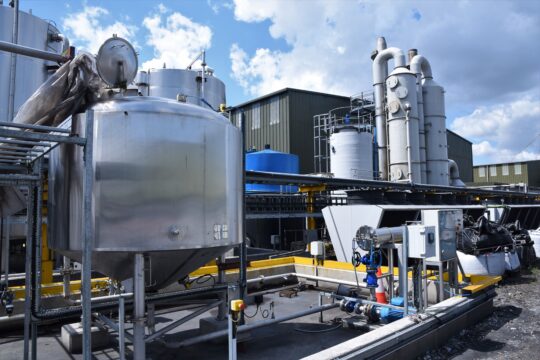
Biogas & biomethane operators – what happens to your spent activated carbon once it reaches the end of its service life?
The purification of biogas and biomethane often relies on specialist activated carbons to remove contaminants such as H₂S, siloxanes, VOCs and other trace compounds. During the filtration process these contaminants are captured within the carbon, eventually requiring replacement to maintain treatment performance.
Historically, heavily sulfur-loaded carbons presented significant challenges for recycling and were often disposed of as waste. Puragen’s advanced thermal reactivation capabilities allow suitable spent carbons from biogas and biomethane applications, including high sulfur loadings, to be safely reactivated and returned to service as part of a closed-loop carbon management strategy. Commenting on our high-sulfur reactivation technology, our MD Steve Bell stated, “Other carbon companies may claim to have this type of capability in development, but we already have our ‘CR3’ process up and running, providing a unique service to the biogas industry that demonstrates our technological and thought leadership in this sector. What’s more, with Puragen there are no hidden charges. We are transparent with our pricing and don’t hit customers with ‘extras’ once they’ve signed up with us!”
This capability forms part of a broader approach to biogas and biomethane purification. Puragen supports operators throughout the treatment lifecycle, from contaminant assessment and carbon selection through to filtration, carbon exchange, reactivation and re-use.
As biogas feedstocks and operating conditions vary significantly between sites, selecting the correct treatment strategy is critical. H₂S remains a major concern due to its corrosive nature and potential impact on CHP engines, upgrading equipment and downstream infrastructure. Siloxanes, terpenes, VOCs NH3 and other contaminants can also affect operational reliability and gas quality.
The benefits of Puragen’s reactivation approach are clear:
- Reduced waste disposal requirements
- Lower lifecycle CO₂ emissions by more than 90% compared with virgin carbon
- Conservation of natural resources
- Support for circular economy objectives
- Continued treatment performance through effective carbon management
Puragen’s biogas and biomethane capabilities include:
- Specialist activated carbons for H₂S, siloxane and VOC removal
- VOCSorber® mobile filtration systems for rapid deployment and flexible operation
- Application-specific carbon selection and technical support
- Advanced thermal reactivation for spent activated carbon
- Carbon exchange programmes and lifecycle management
- In-house technical, laboratory and R&D support
- Support for biomethane, biogas and bioCO₂ purification applications
By combining advanced purification technologies with closed-loop carbon management, Puragen helps operators improve gas quality, protect critical equipment, optimise operational performance and reduce the environmental impact of activated carbon use.
To find out more about how Puragen can support your biogas or biomethane treatment objectives, get in touch with our team of purification experts.