
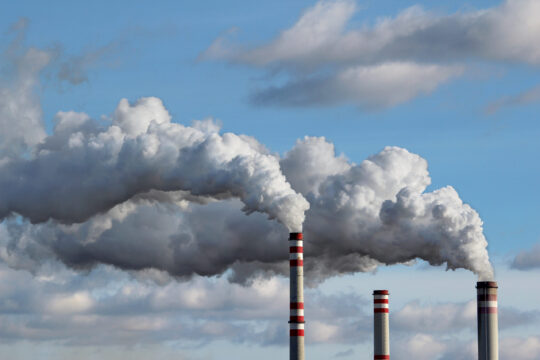
Environmental regulations in the European Union are entering a new phase of compliance going into 2026/27, with several measures taking effect between 2025 and 2028. For industrial operations in France, the combined EU directives and national legislation are increasing further pressure on how emissions are being monitored, updates to treatment systems, and methods to control and remove PFAS in water and air.
France has adopted an assertive approach against PFAS, introducing direct product bans, pollutant limitations, and pressure on industrial discharge in 2026. While several regulations remain in development, the overall message is direct. Monitoring will rise, emission limits will tighten, and greater penalties will be enforced upon several sectors in the market.
Waste gas emissions – the WGC BAT compliance deadline
The BAT Conclusions for Common Waste Gas Management and Treatment Systems (WGC BAT) were published in December 2022, under the Industrial Emissions Directive (IED). Following the end of the framework’s 4-year timetable, compliance for existing installations is required by 12th December 2026.
The new rules apply to waste gas emissions from chemical sites, affecting industries such as polymer/resin manufacturing, pharmaceuticals, speciality chemicals, petrochemicals, and solvent processing. Pollutants restricted – and their typical WGC BAT limits – include:
- Volatile Organic Compounds (VOCs) (Total 3 – 20 mg C/Mn3)
- Halogenated VOCs (1–5 mg/Nm3)
- Hydrogen Chloride (HCI) (2–10 mg/Nm3)
- Hydrogen Fluoride (HF) (1–5 mg/Nm3)
- Other hazardous organic emissions
Many legacy plants have historically operated above these ranges, resulting in the need for upgrades. Solutions include scrubbing systems, thermal oxidation or activated carbon as an effective step forward. Halogenated VOCs are particularly relevant to PFAS manufacturing, where activated carbon is commonly used as a final polishing step.
PFAS regulations in France
In February 2025, Law No. 2025-188 established France’s national PFAS framework as part of a broader action plan to identify emission sources, determine pollution liability, strengthen industrial oversight, and reduce PFAS pollution. Key measures include:
- Expanded monitoring of industrial sites
- Mapping of PFAS contamination sources
- Polluter pays charging for PFAS discharges in water
- Product restrictions for certain consumer goods
From January 1, 2026, France has prohibited the manufacture, import, export and sale of PFAS-containing cosmetics, ski waxes and certain textile and footwear, subject to defined exemptions.
The legislation also puts in place a longer-term policy, with the aim of eliminating certain industrial PFAS discharges to water within five years of it coming into effect.
While the PFAS-specific polluter-pays fee of €100/100 g, PFAScurrently applies only to water under Law No. 2025‑188, other polluter-pays obligations remain governed by general environmental law (Article L. 110‑1). As monitoring and mapping expand, operators will need robust containment and treatment strategies across water and air streams.

Drinking water standards across the EU
PFAS regulation is also tightening through an EU-wide legislation under the recast Drinking Water Directive. New PFAS limits are becoming mandatory from January 12, 2026, requiring Member States to ensure drinking water complies with two parameters:
- Sum of 20 PFAS: 0.10 µg/L
- Total PFAS: 0.50 µg/L
These values are now enforceable compliance thresholds, rather than future targets. Water utilities and municipal suppliers must implement monitoring programmes and upgrade treatment systems where concentrations exceed limits.
For drinking water compliance, activated carbon remains one of the most established and scalable technologies for PFAS removal, particularly where rapid upgrades are required to meet the 2026 thresholds, as they can be supplied in mobile filters.
Industrial wastewater and micropollutant control
The revised Urban Wastewater Treatment Directive (EU) 2024/3019 came into effect in January 2025.
The directive is expanding the regulatory framework, addressing micropollutants in wastewater streams and introducing a responsibility model, where pharmaceutical and cosmetic producers are required to contribute to the financing of treatment technologies.
The reform places great emphasis on the removal of harmful residues from pharma and cosmetic waste, including PFAS-related compounds and other persistent micropollutants in wastewater streams. As this continues to progress, wastewater treatment plants across Europe are expected to introduce additional treatment phases in their operations.
Industrial permitting under the revised IED
The revised Industrial Emissions Directive (IED 2.0) began in August 2024 and must be transposed into national law by July 1st, 2026.
The directive is set out to strengthen requirements for monitoring, reporting, and controlling hazardous substances across all sectors regulated under the IED framework. For operators in France and the EU, this means that environmental permits issued establish tighter emission limits, stronger monitoring, and higher expectations around pollution prevention. 2025 and 2026 mark the preparation period ahead of the permit reviews for all operators.
What does this mean for operators?
These legislative developments are showcasing rapid progress across the European Union, determined to take a staunch approach against PFAS in industrial processes, such as in wastewater, air or gas emissions.
For operators in France, 2026 is the year of preparation and transformation as waste gas treatment, industrial wastewater management, and PFAS monitoring programmes are being implemented. Facilities that onboard new abatement and treatment technologies during this period will therefore be well-equipped to manage the next phase of EU environmental policies.
Operators should be aware of liability exposure for both current emissions and historic contamination, with investigations and remediation potentially triggered under France’s polluter pays framework.
Milestones of key focus
Environmental compliance is currently undergoing a transformation for the remainder of the decade.
1 January 2026: French PFAS product bans begin for cosmetics, ski waxes, and certain consumer textiles/footwear.
12 January 2026: EU PFAS drinking water limits become mandatory.
1 July 2026: Deadline for Member States to transpose revised IED.
12 December 2026: EU chemical sector WGC BAT compliance deadline.
December 2028: Smitheries and Foundries BAT compliance deadline.
Puragen’s solution
Puragen supports industrial operators with a comprehensive, end-to-end approach to PFAS abatement to address water, gas and air pollutant concerns.
Search
Puragen operates advanced analytical capabilities, including LC-MS systems that enable the identification and quantification of PFAS compounds. These tools support early risk assessment, monitoring programmes, and treatment strategy development.
Capture
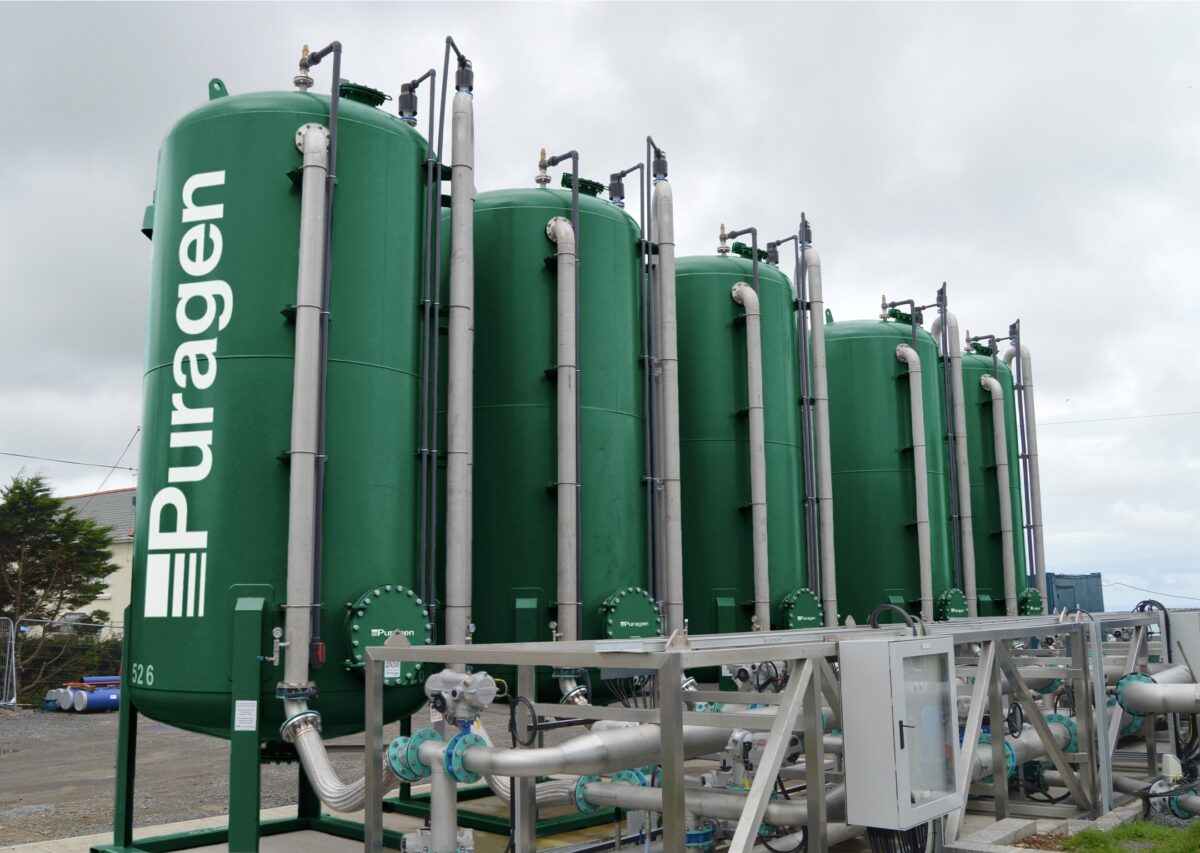
Puragen provides engineered activated carbon solutions designed for the adsorption of VOCs, halogenated solvents and PFAS in both gas and liquid applications. These solutions are used in industrial abatement systems, drinking water treatment, and wastewater polishing.
Destroy
Puragen’s REACT-Sys+ technology enables the treatment and reactivation of all granular activated carbon (GAC) used in treatment processes, including PFAS-laden spent carbon. The process fully destroys contaminants and restores the carbon for reuse, removing the reliance on landfill or incineration and lowering overall lifecycle emissions.
Our Search to Capture to Destroy approach supports organisations in safely managing heavily laden PFAS-contaminated carbon, meeting evolving regulatory requirements, and proactively preparing for increasingly stringent environmental standards across the UK and Europe.