
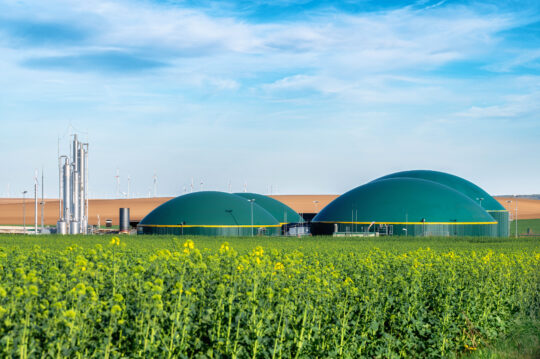
Recent legislative frameworks passed by the U.S. Senate represent a monumental shift for the renewable energy sector, directly targeting the acceleration of biogas projects and national decarbonization goals. Historic funding mechanisms and expanded tax incentives now provide the financial certainty required to capture methane emissions and convert them into valuable renewable natural gas (RNG). This federal backing transforms agricultural, municipal, and industrial waste streams from environmental liabilities into highly productive energy assets. We view these legislative advancements as the critical catalyst needed to scale infrastructure, deploy advanced filtration systems, and establish a truly circular carbon economy.
The integration of robust federal incentives fundamentally changes the economic viability of complex biogas purification projects. By explicitly supporting clean energy production, the legislation empowers facility operators to invest heavily in the sophisticated infrastructure required to capture raw biogas and upgrade it to pipeline-quality standards.
Accelerated Funding and Tax Credits for Biogas Infrastructure
The Senate’s renewable energy legislation directly supports biogas expansion by establishing comprehensive tax credits that offset the high initial capital expenditures associated with project development. Investment Tax Credits (ITCs) and Production Tax Credits (PTCs) now extend specifically to biogas systems, lowering the barrier to entry for developers looking to build anaerobic digesters and gas upgrading facilities. This financial scaffolding enables stakeholders to confidently invest in cutting-edge purification technologies that maximize energy yields and ensure strict compliance with pipeline specifications.
Furthermore, the legislation establishes clear pathways for long-term operational profitability through enhanced incentives for low-carbon fuel production. Facilities can leverage these provisions to upgrade their existing infrastructure, integrating high-performance activated carbon filtration systems to remove contaminants like hydrogen sulfide and siloxanes. By offsetting these upgrade costs, the federal government accelerates the nationwide deployment of scalable, plug-and-play biogas solutions that deliver maximum flexibility and minimal downtime.
Driving Deep Decarbonization Across Critical Industries
Expanding biogas production serves as a cornerstone of the broader national strategy to achieve deep decarbonization. Capturing fugitive methane from landfills, wastewater treatment plants, and agricultural operations prevents one of the most potent greenhouse gases from entering the atmosphere. When we upgrade this captured gas into RNG, it replaces fossil-derived natural gas in heavy-duty transportation and industrial manufacturing, actively reducing the carbon intensity of sectors that are notoriously difficult to electrify.
This legislative support ensures that the environmental benefits of biogas are maximized through optimized carbon engineering and rigorous gas upgrading processes. The transition to renewable natural gas not only displaces traditional fossil fuels but can also result in carbon-negative energy production when combined with effective carbon capture and sequestration methodologies. Our commitment to delivering measurable performance improvements aligns seamlessly with these national decarbonization directives, ensuring that every filtration system deployed contributes significantly to reducing the global carbon footprint.
Broader Implications for the Future of the Biogas Sector
The downstream implications of this federal legislation will reshape the entire biogas supply chain, driving unprecedented demand for technical innovation and standardized purification processes. As more raw biogas sites come online, the industry faces an escalating need for specialized filtration media and reliable carbon reactivation services to manage complex contaminant profiles. This influx of projects necessitates a shift toward modular, mobile filter fleets that can adapt to varying flow rates and site-specific operational challenges without generating on-site waste.
Additionally, the legislative push for cleaner energy sources establishes stricter regulatory standards for gas quality, mandating the use of precise and dependable purification systems. We recognize that sustained industry growth requires continuous innovation in adsorption technologies and system design. Long-term partnerships between policymakers, project developers, and filtration experts will be essential to overcome emerging technical challenges and ensure the reliable delivery of premium-quality renewable natural gas to the national grid.
Advancing a Sustainable Energy Ecosystem
The comprehensive support from the U.S. Senate marks a definitive turning point for renewable energy infrastructure, firmly positioning biogas as a vital component of the clean energy transition. By mitigating financial risks and incentivizing technological advancements, the legislation empowers the industry to effectively transform waste into a reliable, low-carbon fuel source. We remain dedicated to supporting this transition by engineering the robust purification solutions required to meet the demands of a rapidly expanding and increasingly sophisticated biogas market.
Frequently Asked Questions About Biogas Purification
What is biogas purification, and why is it necessary?
Biogas purification is the highly technical process of removing unwanted contaminants—such as hydrogen sulfide, siloxanes, volatile organic compounds, and moisture—from raw biogas. We must purify this gas because these impurities can cause severe corrosion, abrasive wear, and mechanical failure in downstream equipment like engines, turbines, and compressors. Effective purification upgrades raw biogas into biomethane or renewable natural gas, ensuring it meets the strict quality standards required for grid injection or use as a vehicle fuel.
How do activated carbon systems improve biogas quality?
Activated carbon systems utilize highly porous carbon media to trap and remove specific molecular contaminants from the biogas stream through physical adsorption and chemical reactions. We engineer these systems to selectively target challenging impurities like volatile organic compounds and siloxanes, which other primary scrubbing methods often leave behind. Integrating specialized activated carbon filters ensures the final gas product achieves ultimate purity, protecting expensive capital equipment and maximizing the overall energy value of the resource.
Puragen’s mission is simple: to deliver the best possible filtration solutions for every customer, most sustainably and cost-effectively. We operate a growing mobile filter fleet and utilize an integrated approach combining carbon engineering and reactivation services to solve your most complex purification challenges. Get in touch to partner with us and elevate your facility’s performance.